
Day: March 2, 2025

The Lasting Impact of Children’s Drawing Classes on Cognitive, Emotional, and Social DevelopmentThe Lasting Impact of Children’s Drawing Classes on Cognitive, Emotional, and Social Development

In a world dominated by screens, structured learning, and digital communication, the power of traditional art forms like drawing remains undeniable. While technology has made its mark in the educational space, drawing classes continue to hold a unique and irreplaceable role in a child’s development. More than just an opportunity to create, children’s drawing classes provide numerous benefits that impact cognitive, emotional, and social growth. These classes offer a multifaceted approach to learning that encourages children to explore their creative potential while developing essential skills that will support them throughout their lives. 創意學堂 lihkg.

Unlocking Creativity and Imagination

Drawing classes ignite the creative spark in children by allowing them to express their ideas freely. Creativity isn’t confined to just producing artwork; it’s about how a child approaches problem-solving, thinks critically, and invents new ideas. When children pick up a pencil and begin to sketch, they engage in a process of self-expression that’s unique to each individual. Whether they are designing imaginary creatures or drawing scenes from their favorite stories, drawing provides children with an endless canvas to explore their imagination.

The act of drawing enables children to visualize abstract concepts, build new worlds, and articulate ideas they might not be able to express with words alone. By encouraging children to think creatively, drawing classes teach them that there’s more than one way to approach a task or solve a problem. This mindset of open-ended exploration is important not only in artistic fields but also in every aspect of life, from scientific innovation to business development.

Enhancing Cognitive Development and Problem-Solving Skills

Drawing classes provide an excellent opportunity for children to enhance their cognitive abilities. Through drawing, children learn to observe and represent the world around them, which boosts their visual perception and spatial awareness. For instance, when drawing a picture, children need to consider the size, proportions, and relationships between different elements within their artwork. These skills directly transfer to cognitive development, particularly in understanding geometry, symmetry, and spatial reasoning.

Additionally, drawing encourages children to develop critical thinking and problem-solving skills. As they work through their art, they may encounter challenges, such as deciding how to portray a particular shape, adding depth to an image, or choosing the right colors. These challenges require children to think critically, analyze their options, and make decisions based on their observations and intentions. By learning to tackle these obstacles, children build essential problem-solving skills that will serve them well in school and later in life.

Drawing also requires children to process information in various ways—through both visual and physical engagement. As children plan their artwork, they engage in processes like organizing their thoughts, prioritizing elements of the design, and deciding how best to execute their plans. These steps enhance their executive function skills, which include planning, memory, and the ability to focus. Developing these skills through drawing can improve their academic performance and support future learning in a variety of subjects.

Promoting Emotional Expression and Regulation

While drawing nurtures creativity, it also plays a key role in emotional development. Children often have difficulty articulating complex emotions, and drawing provides them with an effective outlet to express what they may not be able to say with words. Whether it’s joy, frustration, anxiety, or excitement, drawing allows children to externalize their feelings in a non-verbal way.

For example, children may choose certain colors or textures to reflect how they feel. A child who is feeling calm may use soft pastels or rounded shapes in their artwork, while one who is anxious may use bold lines and dark colors. By connecting their emotions to their artwork, children are better able to understand their feelings, regulate their emotions, and gain insight into their emotional world.

Drawing can also have a therapeutic effect. For children experiencing stress, frustration, or even trauma, art offers a safe and constructive way to cope. The act of drawing can serve as a calming and meditative experience, providing a sense of control and relief. In fact, art therapy is often used to help children manage difficult emotions and experiences. By fostering emotional expression, drawing classes contribute to emotional intelligence, helping children navigate their feelings and develop resilience in the face of challenges.

Building Fine Motor Skills and Hand-Eye Coordination

Another significant benefit of drawing is its contribution to fine motor skill development. Fine motor skills refer to the small, precise movements that allow children to control their hand and finger movements, which are essential for tasks like writing, buttoning shirts, or using tools. Drawing involves intricate hand movements, whether it’s holding a pencil, drawing a fine line, or shading in details, and these activities help strengthen the muscles and coordination necessary for fine motor control.

As children practice drawing, they improve their hand-eye coordination, which is crucial for numerous everyday activities. Learning to control the pencil’s pressure, stay within lines, or manipulate different art tools helps children develop better dexterity and control over their hand movements. These skills have a direct impact on a child’s ability to write neatly, use scissors, and perform other tasks that require fine motor control.

Drawing also aids in the development of bilateral coordination—using both hands in a controlled and coordinated manner. As children learn to hold the drawing tool with one hand and stabilize their paper with the other, they engage both sides of the brain and body, further strengthening their motor skills.

Strengthening Social Skills Through Collaborative Art

Though drawing is often a solitary activity, many children’s drawing classes incorporate group projects and opportunities for social interaction. Working in groups on art projects fosters collaboration, communication, and teamwork—skills that are crucial in both academic and real-world settings.

When children work together to create a group drawing or mural, they learn to share materials, negotiate ideas, and provide constructive feedback to their peers. These collaborative experiences promote empathy, respect, and an understanding of diverse perspectives. Through drawing, children learn how to engage with others, offer support, and adapt to group dynamics—all while cultivating a sense of community and shared purpose.

Furthermore, presenting their artwork in front of a group or receiving feedback from peers helps children develop confidence in their abilities. Sharing their art with others allows children to celebrate their accomplishments and take pride in their work, which builds their self-esteem and public speaking skills.

Boosting Confidence and Self-Esteem

One of the most impactful outcomes of children’s drawing classes is the boost to their confidence and self-esteem. Completing a drawing gives children a sense of accomplishment and pride in their work. The positive reinforcement they receive from teachers, peers, and family members further encourages them to continue pursuing their creative endeavors.

Drawing classes often emphasize personal growth and effort over perfection, which is a powerful way to build self-esteem. Children learn that mistakes are a natural part of the learning process and that each piece of artwork is an opportunity to grow and improve. As children see their skills progress over time, they gain confidence in their ability to overcome challenges and achieve their goals.

Additionally, the freedom to express themselves artistically allows children to embrace their uniqueness. As they create artwork that reflects their individuality, they begin to recognize and value their own perspectives, contributing to a positive sense of self-worth.

Conclusion: The Multifaceted Benefits of Drawing for Children

Children’s drawing classes are far more than just a way for children to pass the time. They serve as a powerful tool for nurturing cognitive, emotional, and social development. Drawing enhances creativity, sharpens problem-solving skills, and strengthens fine motor abilities while providing a safe space for emotional expression and growth. Additionally, these classes foster collaboration, boost self-confidence, and contribute to the development of essential life skills that will support children as they navigate their academic and personal lives.

By encouraging children to engage in drawing, we provide them with the opportunity to unlock their full potential, develop essential life skills, and cultivate a lifelong love for creativity. In a world that increasingly values innovation, emotional intelligence, and problem-solving, the lessons learned through drawing classes have the power to shape future generations of thinkers, leaders, and creators.
The Psychology Behind Slot Machine Design: How They Keep You PlayingThe Psychology Behind Slot Machine Design: How They Keep You Playing

Slot machines are not just games of ; they are meticulously premeditated to engage players and keep them coming back for more. The psychological science behind slot simple machine plan is a enthralling intermix of visual, exteroception, and activity science, all workings together to create an immersive and often habit-forming see. Adam789.

One of the key psychological principles used in slot simple machine plan is the use of seeable and exteroception cues. Bright, flashing lights, vivid colors, and exciting sounds are all carefully elite to grab a player 39;s attention and create a feel of excitement. When a participant wins, the machine often emits function sounds, reinforcing the deportment and making the participant feel rewarded, even if the win is relatively modest. This of sights and sounds creates a sensorial-rich environment that can make it unruly for players to walk away.

Another science maneuver made use of by slot machines is the construct of near-misses. Near-misses pass off when the symbols on the reels stop just short of a victorious . For example, two twin symbols may appear on the reels, with the third just one spot away. While this is technically a loss, it can feel like a win is just around the , supporting players to carry on performin in hopes of hitting the jackpot. Studies have shown that near-misses touch of the same areas of the brain as actual wins, making them a right tool in holding players busy.

The randomness of slot machines is another factor that plays into their science appeal. Slot machines use unselected total generators(RNGs) to determine the outcome of each spin, creating a sense of volatility. This randomness can create a perception of control, where players believe that they can influence the final result through their actions, such as timing their spins or choosing specific machines. In world, the termination is entirely random, but the illusion of verify can keep players busy for longer periods.

The construct of quot;losses covert as wins quot; is another psychological maneuver used in slot machine plan. This occurs when a player wins a small total that is less than their master copy bet. For example, a player might bet 1 and win 0.50. While this is technically a loss, the simple machine may still play social function sounds and display successful animations, qualification the player feel like they 39;ve won, even though they 39;ve actually lost money. This maneuver can further players to continue performin, as they may not full understand how much money they 39;re losing over time.

Lastly, slot machines often integrate progressive jackpots, where a allot of each bet is added to a maturation appreciate pool. The allure of a massive jackpot can be enticing, especially as the pot come increases. This creates a feel of urging and exhilaration, as players feel like they have a chance to win life-changing sums of money. The possibleness of hitting the kitty, no weigh how unlikely, can keep players spinning the reels for hours on end.

In conclusion, the psychological science behind slot simple machine plan is a cautiously crafted strategy that leverages ocular and auditive cues, randomness, near-misses, and the allure of jackpots to keep players occupied. Understanding these tactic can help players make more au courant decisions and approach slot machines with a greater awareness of how they work. While slot machines can be diverting, it 39;s necessity to recognize the science tricks at play and adventure responsibly.

Chinese Medicine: A Comprehensive Approach to Health and HealingChinese Medicine: A Comprehensive Approach to Health and Healing

For over two millennia, Chinese medicine has been a cornerstone of healthcare in China and many other parts of the world. It is a rich and profound system that incorporates philosophy, natural remedies, and an intimate understanding of the body and mind. Chinese medicine isn’t just a set of practices for treating illness, but a lifestyle aimed at promoting balance and harmony in all aspects of life. In today’s world, as many people search for alternative or complementary healing systems, Chinese medicine offers a holistic approach that resonates with those seeking natural ways to address their health concerns. This article delves into the core philosophies, practices, and modern relevance of Chinese medicine.

The Philosophical Foundations of Chinese Medicine

Chinese medicine is deeply rooted in the ancient philosophies of Taoism and Confucianism, which emphasize the interconnectedness of nature, the body, and the universe. The key philosophies that guide Chinese medicine include the concept of Qi (energy), the balance of Yin and Yang, and the Five Elements theory.

1. Qi: The Vital Energy of Life

At the heart of Chinese medicine is the concept of Qi (pronounced "chee"), which is considered the fundamental life force or energy that flows through the body and the universe. Qi is responsible for all physiological activities, and its flow governs physical and mental health. In Chinese medicine, illness arises when Qi is blocked, deficient, or stagnant. Restoring the smooth flow of Qi is central to maintaining health and healing.

The body has a network of energy pathways known as meridians, and these pathways are responsible for transporting Qi throughout the body. Acupuncture, acupressure, and other treatments aim to regulate and harmonize the flow of Qi, addressing blockages and imbalances in the system.

2. Yin and Yang: The Dynamic Balance

The concept of Yin and Yang represents two opposing yet complementary forces that exist in everything—inside the body and in the environment. Yin is associated with qualities such as cold, rest, and nourishment, while Yang is linked to heat, activity, and movement. In a healthy body, Yin and Yang are balanced; when they become imbalanced, illness occurs.

For example, too much Yang can lead to heat-related symptoms like inflammation, fever, or irritability, while too much Yin can manifest as fatigue, cold extremities, and mental sluggishness. Chinese medicine treatments aim to restore balance between Yin and Yang, ensuring that neither force dominates the body’s natural state.

3. The Five Elements: A Framework for Understanding Health

The Five Elements theory is another cornerstone of 跌打醫館 . These elements—Wood, Fire, Earth, Metal, and Water—are believed to correspond not only to different organs in the body but also to various physiological functions and emotional states. Each element is interconnected, and the balance between them determines health.

  • Wood corresponds to the Liver and is associated with the emotion of anger.
  • Fire corresponds to the Heart and is linked to joy.
  • Earth corresponds to the Spleen and is connected with worry.
  • Metal corresponds to the Lungs and is associated with grief.
  • Water corresponds to the Kidneys and is linked to fear.

Imbalances within any of the Five Elements can lead to both physical and emotional disharmony. Chinese medicine seeks to identify and correct these imbalances to restore overall health.

Key Practices in Chinese Medicine

Chinese medicine uses a wide range of therapies to restore balance and address health concerns. These treatments are often personalized, as each individual’s condition and constitution are unique. Below are some of the key therapies in Chinese medicine:

1. Acupuncture: Restoring Qi Flow

Acupuncture is one of the most well-known practices in Chinese medicine. It involves inserting very thin needles at specific points on the body, known as acupoints, which correspond to meridians and organs in the body. These points are carefully chosen based on the diagnosis of the individual's condition.

The goal of acupuncture is to stimulate the flow of Qi, improve blood circulation, and relieve blockages or stagnation in the body. This method has been used to treat a wide variety of conditions, including chronic pain, stress, digestive issues, hormonal imbalances, and mental health concerns like anxiety and depression.

Acupuncture has gained worldwide recognition for its effectiveness in pain management, with numerous studies supporting its ability to reduce inflammation, promote healing, and improve general health.

2. Herbal Medicine: Natural Remedies for Restoration

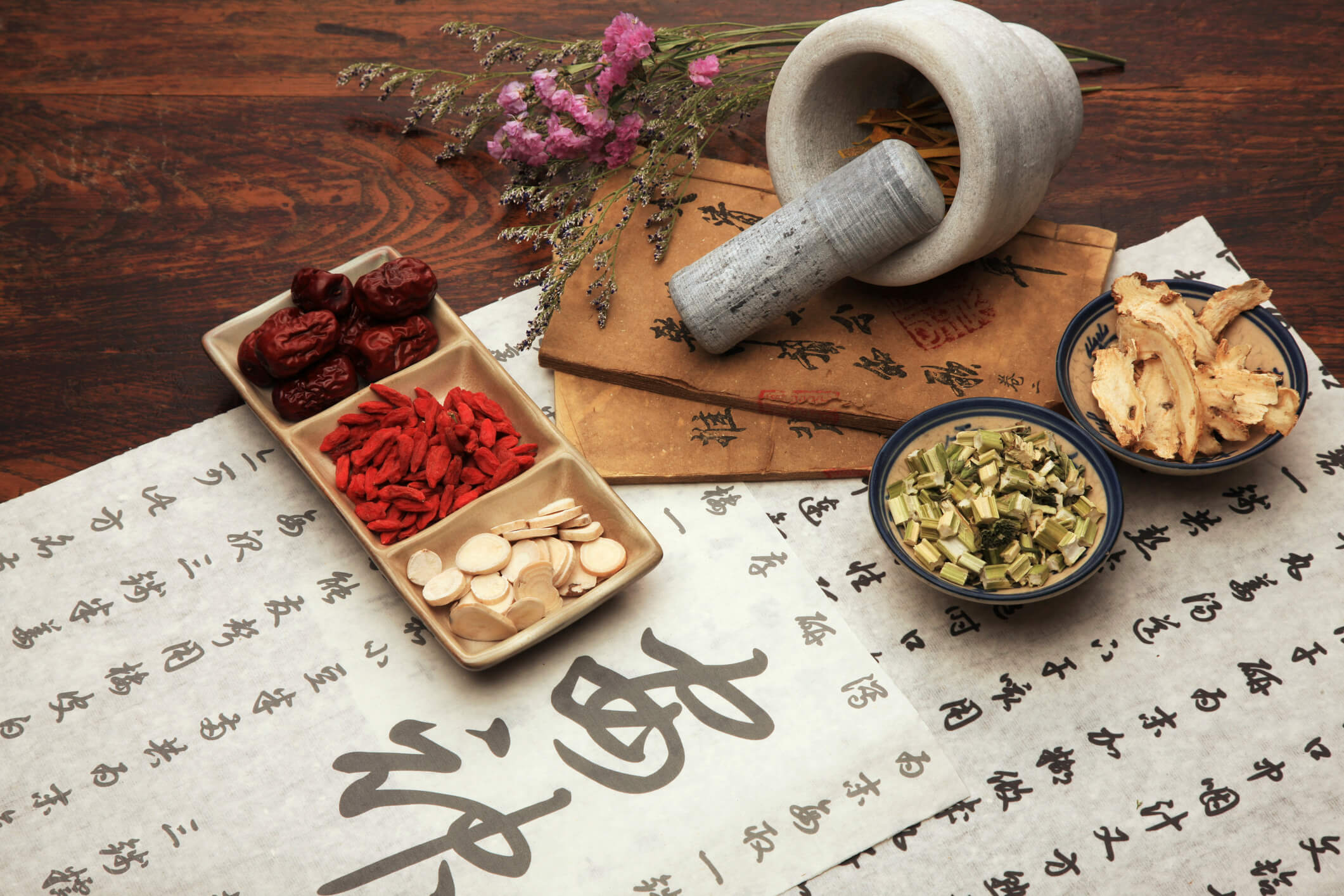
Chinese herbal medicine is one of the most ancient and widely practiced branches of Chinese medicine. Herbs are selected based on the individual’s unique condition and constitutional type. Unlike Western pharmaceutical drugs, Chinese herbal medicine often uses complex combinations of herbs, which work synergistically to address a variety of symptoms and root causes of illness.

Some commonly used Chinese herbs include:

  • Ginseng: Known for its ability to boost energy, strengthen the immune system, and reduce fatigue.
  • Astragalus: Often used to enhance the body's resistance to illness and support immune function.
  • Dong Quai: A powerful herb often used in women’s health, particularly for regulating menstrual cycles.
  • Licorice Root: Used to harmonize the actions of other herbs and strengthen digestion.

Herbal medicine is commonly used to treat chronic illnesses, boost immunity, improve digestion, and restore vitality. The benefits of Chinese herbal medicine are increasingly being recognized in the West as more people seek natural, non-pharmaceutical options for health.

3. Cupping Therapy: Releasing Stagnation

Cupping therapy is another popular treatment in Chinese medicine. It involves placing glass, bamboo, or silicone cups on the skin and creating suction, which pulls the skin and underlying tissue into the cup. This suction is believed to help release stagnation in the Qi and blood, improve circulation, and relieve muscle tension.

Cupping is often used to treat musculoskeletal pain, respiratory issues, and even digestive problems. The distinctive marks left by cupping are often mistaken for bruises, but they typically fade within a few days and do not cause any long-term harm.

Cupping has gained significant popularity in recent years, particularly among athletes who use it to speed up recovery from muscle soreness or injuries.

4. Moxibustion: Warming the Body to Heal

Moxibustion is a therapeutic technique that involves burning moxa, a dried herb made from mugwort, near specific acupuncture points on the body. The heat from moxibustion is believed to help invigorate Qi, expel cold from the body, and promote healing.

Moxibustion is often used in cases where cold or deficiency is present in the body, such as chronic pain, digestive issues, or low energy. It can be applied in conjunction with acupuncture or other treatments for enhanced therapeutic effects.

5. Tai Chi and Qigong: Cultivating Health and Vitality

Tai Chi and Qigong are mind-body practices that combine physical movement, breath control, and meditation to cultivate and balance Qi. These gentle exercises promote relaxation, improve flexibility, reduce stress, and increase energy levels.

  • Tai Chi: Often referred to as "meditation in motion," Tai Chi is a martial art that focuses on slow, fluid movements and deep breathing. It has been shown to enhance balance, improve cardiovascular health, and reduce the risk of falls in older adults.
  • Qigong: Similar to Tai Chi but with simpler movements, Qigong is a practice designed to cultivate and circulate Qi throughout the body. It is often used to promote overall health and longevity, improve mental clarity, and alleviate stress.

Both practices are beneficial for maintaining long-term health and preventing disease, and they have gained widespread popularity around the world for their ability to improve physical and mental well-being.

The Relevance of Chinese Medicine Today

While Chinese medicine is centuries old, its practices continue to be relevant and effective in today’s world. The modern lifestyle, with its emphasis on fast-paced work schedules, stress, poor diet, and lack of physical activity, has created a demand for holistic approaches to health that go beyond the treatment of symptoms. Chinese medicine, with its emphasis on prevention, balance, and harmony, offers an invaluable resource for addressing modern health challenges.

1. Chronic Pain and Inflammation

Chinese medicine has proven highly effective in treating chronic pain, inflammation, and musculoskeletal issues. Practices such as acupuncture, cupping, and herbal remedies have provided relief for conditions like arthritis, fibromyalgia, sciatica, and back pain. Acupuncture, in particular, has been shown to stimulate the release of endorphins, the body’s natural painkillers, helping to reduce pain and inflammation without the need for pharmaceutical drugs.

2. Mental Health and Stress Management

In today’s stressful world, mental health challenges such as anxiety, depression, and insomnia are becoming increasingly common. Chinese medicine addresses these conditions by balancing the body’s energy and regulating emotional states. Acupuncture, herbal medicine, and practices like Tai Chi and Qigong are known to help alleviate stress, improve mood, and promote relaxation. These natural treatments provide an alternative to pharmaceutical interventions for individuals seeking to address mental health issues without the side effects of traditional medications.

3. Immune Support and Preventive Care

Chinese medicine is rooted in the idea of preventive care—helping the body maintain balance before illness occurs. Herbs such as astragalus and ginseng are commonly used to boost the immune system and increase resistance to infection. Regular acupuncture treatments and Tai Chi practice can also help keep the body's energy flowing smoothly, strengthening its defenses and preventing disease.

Conclusion: A Holistic Approach for Modern Wellness

Chinese medicine offers a holistic, natural, and effective way to restore health, enhance vitality, and promote well-being. By focusing on balance, prevention, and the interconnectedness of body, mind, and spirit, Chinese medicine provides a timeless approach to healing that continues to resonate in today’s fast-paced world. Whether used to treat specific conditions, manage chronic illness, or maintain overall wellness, Chinese medicine offers valuable tools for creating a life of harmony and health. As more individuals seek integrative, holistic healthcare, the wisdom of Chinese medicine stands as a powerful and enduring resource for modern healing.