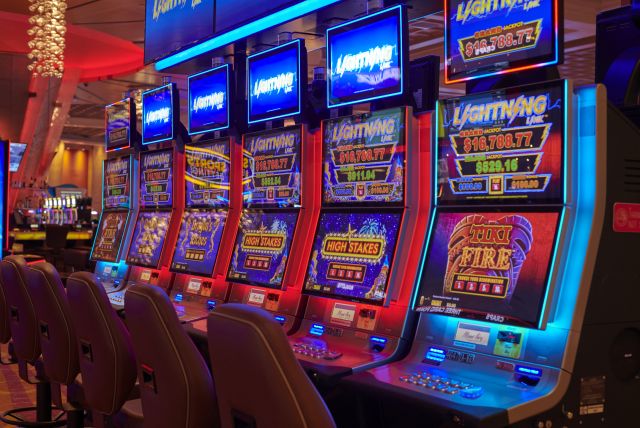
Slot machines and online slot-style games are designed around psychology as much as entertainment.
Even when outcomes in koitoto are random, players often experience strong emotional reactions that influence how long they play, how much they bet, and how they interpret wins and losses.
Understanding these emotional triggers helps explain why people sometimes feel “patterns” or “hot streaks” even when the system is random.
The Illusion of Control
Why players feel they can predict outcomes
One of the strongest emotional triggers is the illusion of control. This happens when players believe their actions influence a random system.
In slot-style games, this may appear as:
- Pressing the button at a “perfect time”
- Stopping reels manually
- Believing certain times of day are “luckier”
Even though outcomes are determined by random number generators, the brain looks for patterns. Humans naturally want to find order, even in randomness.
This creates a powerful emotional loop:
- “I almost won that time”
- “If I adjust my timing, I can win next round”
Near-Miss Effect
Why almost-winning feels more exciting than losing
The near-miss effect is one of the most studied psychological triggers in gambling behavior.
A near-miss happens when:
- Two jackpot symbols appear
- The third just barely misses
Even though the result is still a loss, the brain reacts similarly to a win. This triggers excitement instead of disappointment.
Why this matters emotionally:
- It increases motivation to continue playing
- It creates the feeling that a win is “close”
- It strengthens engagement even during losses
The brain interprets “almost winning” as progress, even when nothing has actually changed.
Variable Reward System
The unpredictability that keeps attention locked
Slot-style games use a variable reward schedule, meaning wins happen unpredictably.
This is powerful because:
- You never know when the next reward will come
- Small wins appear randomly between losses
- Big wins feel rare but memorable
Psychologically, this creates anticipation. The brain releases dopamine not only when winning, but also when expecting a possible win.
This is similar to how people feel when checking notifications or social media feeds.
Dopamine and Reward Anticipation
The brain chemical behind excitement
Dopamine is a neurotransmitter linked to pleasure and motivation. In gambling-like systems, dopamine spikes more during anticipation than during the actual reward.
This means:
- Waiting for the result can feel more exciting than the result itself
- The brain learns to chase the feeling of “maybe next spin”
Over time, this creates emotional dependency on the uncertainty rather than the outcome.
Loss Disguised as Near Wins
Why losses don’t always feel like losses
Slot-style systems often make losses feel less negative through small design tricks:
- Frequent small payouts that are lower than the bet
- Animations that look like wins
- Sounds that celebrate even minor rewards
This creates a “loss disguised as reward” effect.
Emotionally, players may feel:
- “I’m still doing okay”
- “I haven’t really lost much”
But in reality, the overall balance may still be decreasing.
The Gambler’s Fallacy
Believing a win is “due”
The gambler’s fallacy is the belief that past outcomes influence future randomness.
Examples include:
- “It hasn’t paid out in a while, so it must hit soon”
- “I’ve lost five times, the next one will win”
This emotional trigger is powerful because the human brain expects fairness and balance in short timeframes, even when systems are random.
It creates false confidence and encourages continued play.
Sensory Reinforcement
Lights, sounds, and animations matter
Slot-style games use sensory design to reinforce emotional reactions:
- Bright flashing lights for wins
- Celebration sounds for even small rewards
- Fast animations that keep attention engaged
These sensory cues create excitement loops. Even small outcomes feel significant because they are presented dramatically.
Over time, the brain associates these sensory signals with pleasure, increasing emotional attachment.
The “Almost Profit” Feeling
When small wins mask overall loss
Another emotional trigger is the feeling of “almost being ahead.”
This happens when:
- Frequent small wins occur
- Occasional big losses erase those gains
The emotional experience becomes:
- “I keep winning small amounts”
- “I just need one big win to balance it out”
Even if the overall result is negative, the pattern of small wins creates optimism.
Time Distortion
Losing track of time while playing
Slot-style systems often cause players to lose awareness of time.
This happens because:
- Fast repetition reduces reflection time
- Continuous feedback keeps attention focused
- Emotional engagement overrides time awareness
Players may feel like only a few minutes have passed when it has actually been much longer.
This emotional state increases exposure to more cycles of play.
Chasing Behavior
Trying to recover losses emotionally
One of the strongest behavioral triggers is chasing losses.
This occurs when:
- A player loses money or progress
- They feel an urgent need to recover it quickly
Emotionally, this is driven by:
- Frustration
- Hope
- The belief that a win is “due soon”
Instead of stopping, the player continues in an attempt to reverse the emotional discomfort of loss.
Social Proof and Stories
Influence of other people’s wins
People are heavily influenced by stories of success.
In gambling environments, this may appear as:
- Screenshots of big wins
- Stories of jackpot moments
- Shared “luck” experiences
These create emotional bias:
- “If they won, I can too”
- “Big wins are possible right now”
However, these stories are not representative of average outcomes.
Emotional Highs and Lows Cycle
The rollercoaster effect
Slot-style systems create a repeating emotional cycle:
- Anticipation
- Excitement
- Small win or loss
- Disappointment or relief
- Return to anticipation
This cycle becomes emotionally engaging because it mimics excitement patterns found in games and competitions.
The unpredictability intensifies emotional swings.
Why These Triggers Are So Effective
The reason these emotional triggers work so well is because they interact with natural human psychology:
- Humans seek patterns in randomness
- Humans remember wins more than losses
- Humans are sensitive to near-misses
- Humans are motivated by uncertainty
Slot-style systems combine all of these into a single repetitive loop.
Recognizing Emotional Triggers
Understanding these triggers helps people become more aware of their reactions. Some warning signs include:
- Feeling “close to winning” repeatedly
- Believing timing or patterns affect outcomes
- Continuing play to recover losses
- Losing track of time while engaged
- Feeling emotional highs from small rewards
Awareness doesn’t remove the emotions, but it helps separate feeling from reality.
Healthier Perspective on Random Reward Systems
A grounded way to interpret these systems is:
- Outcomes are random, not influenced by patterns
- Near-wins are designed effects, not signals
- Small wins do not indicate profit
- Emotional intensity is part of the design
Understanding this helps reduce misinterpretation of patterns.
Conclusion
Emotional triggers in slot-style gambling systems are deeply tied to human psychology. Illusion of control, near-miss effects, dopamine anticipation, and variable rewards all work together to create strong emotional engagement.
These systems are not just about winning or losing—they are about how the brain reacts to uncertainty, reward, and pattern-seeking behavior. By recognizing these triggers, it becomes easier to understand why people feel certain “patterns” or emotional highs even when outcomes are completely random.
Awareness is the key factor. When individuals understand how these emotional mechanisms work, they are better equipped to interpret their experiences more realistically and avoid being influenced by misleading feelings of control or prediction.