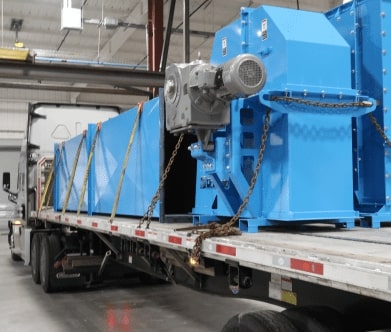
In today’s fast-paced industries, reliable and efficient material handling is essential to maintaining production flow, safety, and profitability. For decades, Orthman Conveying Systems has stood at the forefront of conveying technology, delivering high-performance systems and components trusted across agriculture, energy, mining, food processing, and more. vertical screw feeder.
Whether you're looking for advanced belt conveyor systems, a durable vertical screw conveyor, or expertly crafted special fabrication, Orthman’s name is synonymous with durability, innovation, and American manufacturing excellence.
The Orthman Legacy: Built in Lexington, Nebraska
Located in the heart of America’s industrial belt, Orthman’s Lexington, NE facility has been producing world-class conveying equipment for decades. With deep roots in agriculture and industry, Orthman Mfg has expanded its scope and reach through precision engineering, custom design, and a commitment to solving the toughest conveying challenges.
Whether you know the brand as Orthman, Orthman Manufacturing, or Orthman Mfg, the foundation remains the same: delivering heavy-duty conveying solutions built to outlast and outperform.
Orthman Conveying Systems: Customized Solutions for Every Industry
No two industries move material the same way. That’s why Orthman Conveying Systems offers fully tailored solutions designed to meet the unique requirements of each operation.
From corrosive environments and extreme heat to bulky solids and fine powders, Orthman engineers take a consultative approach to system design—ensuring that your conveyor not only fits but enhances your operation.
Orthman's product range includes:
-
Screw Conveyors (including vertical, shaftless, and feeder types)
-
Enclosed Belt Conveyors
-
Manual Belt Conveyors
-
Transfer and Loading Systems
-
Custom Fabrication for Specialty Applications
Each system is designed for longevity, safety, and optimal flow, using top-quality materials and rigorous engineering standards.
Vertical Screw Conveyor Systems: Taking Efficiency to New Heights
When space is tight or vertical lift is essential, the vertical screw conveyor becomes the solution of choice. Orthman’s vertical screw systems are designed to transport material upward efficiently and safely while maintaining system reliability and minimizing maintenance.
Whether referred to as a screw conveyor vertical, vertical screw feeder, or simply vertical screw conveyors, these systems are trusted in industries where vertical material handling is unavoidable.
Orthman's designs emphasize:
-
Minimal footprint for space-restricted facilities
-
Heavy-duty construction to resist wear and corrosion
-
Precise engineering to prevent backflow or clogging
-
Optional shaftless designs for sticky or fibrous materials
Looking for a shaftless screw conveyor solution? Orthman offers configurations that eliminate the central shaft, perfect for tough-to-handle materials like sludge or industrial waste.
Screw Conveyor Manufacturer with Customization Expertise
Orthman isn’t just a conveyor supplier—it’s a screw conveyor manufacturer with full-service capabilities. From drafting and engineering to fabrication and testing, everything is handled in-house at the Orthman facility.
Every detail is accounted for:
This level of detail ensures your system works flawlessly from day one and continues to perform for years.
Looking to understand how these systems work? Orthman offers resources like a screw conveyor diagram to help customers and partners visualize the mechanics behind the movement.
Belt Conveyor Systems & Enclosed Designs for Clean Handling
While screw conveyors are ideal for specific tasks, belt conveyor systems remain the backbone of many bulk handling operations. Orthman’s manual belt conveyor and enclosed belt conveyors are engineered for continuous operation, material safety, and reduced environmental impact.
-
Manual belt conveyor systems are perfect for smaller operations needing control and easy maintenance access.
-
Enclosed belt conveyors are the go-to choice when minimizing dust, spillage, or contamination is a priority—especially in agriculture and food handling.
No matter your product—grain, coal, fertilizer, wood chips, or aggregate—Orthman’s belt systems are built to handle it all.
Special Fabrication: Engineered Just for You
Orthman’s real strength lies in its special fabrication services. Sometimes, off-the-shelf just doesn’t cut it. That’s when Orthman’s design team steps in to create fully customized systems from the ground up.
From oversized conveyors in energy plants to corrosion-resistant stainless steel designs for food processing, Orthman handles it all:
-
Unique geometry
-
Special coatings
-
Temperature-resistant materials
-
Explosion-proof configurations
-
Fully automated integrations
It’s this deep commitment to problem-solving that has made Orthman a trusted partner across industries and earned their reputation for top-tier Orthman parts and systems.
Trusted Distributors and Partnerships – Herrington PT & Gates Conveyors
To ensure timely delivery, reliable service, and local expertise, Orthman partners with reputable distributors like Herrington PT and Gates Conveyors. These relationships ensure you get fast access to genuine Orthman parts, expert installation help, and trusted maintenance support near your operation.
Whether you’re installing a new system or updating an existing one, Orthman’s network has you covered from design to delivery.
Why Choose Orthman?
With so many conveyor manufacturers in the market, why choose Orthman Conveying Systems?
Here’s what sets them apart:
American Manufacturing – Designed, built, and tested in Lexington, NE
Decades of Experience – Serving a wide range of industries since the beginning
Full-Service Design – Custom engineering for your specific needs
Durable Components – High-quality materials and long-term value
Reliable Partnerships – Strong distributor network and after-sales support
One-Stop Shop – From Orthman parts to complete systems
From agriculture to manufacturing, Orthman’s systems improve safety, efficiency, and ROI at every turn.
Plan Your Project with Orthman Conveying Systems Today
Whether you’re designing a new plant, upgrading outdated equipment, or expanding your current line, Orthman Conveying Systems is your go-to partner. Their proven designs, industry insight, and hands-on service ensure your project runs smoothly from start to finish.
Need help choosing the right system? Orthman’s team is ready to help you select the perfect vertical screw conveyor, belt system, or custom fabrication for your operation.
Visit Orthman Conveying Systems today to get started. Explore product specs, reach out to an expert, or request a custom quote tailored to your needs.
Final Thoughts
In a world where downtime means lost revenue, choosing the right conveying system isn’t just smart—it’s critical. With a proven track record, advanced engineering, and industry-best support, Orthman Conveying Systems continues to lead the way in screw conveyors, belt systems, and custom fabrication.
If you’re searching for a screw conveyor manufacturer, need expert help with vertical screw feeders, or want a reliable partner for enclosed belt conveyors, Orthman delivers solutions that last.
Ready to move material more efficiently? Let Orthman show you the way forward—because at Orthman, moving material is more than a task. It’s a tradition.