
Day: December 5, 2024

Smart Road Safety Products for the Modern WorldSmart Road Safety Products for the Modern World

In today's fast-paced world, road safety has become more important than ever. With millions of vehicles on the road, both personal and commercial, it’s crucial to have the right measures in place to minimize accidents and save lives. Road safety products play a vital role in ensuring that drivers, pedestrians, and cyclists remain protected, particularly as road traffic continues to increase globally. These products are designed to enhance the safety of road users by preventing accidents, reducing their impact, and improving visibility. Flood Protection Barrier.

This article delves into the various road safety products available, their uses, and why they are essential in maintaining safer roads for everyone. From reflective vests to speed bumps and road signs, the landscape of road safety is diverse and continually evolving.

The Importance of Road Safety

Every year, road traffic accidents claim the lives of millions of people worldwide. According to the World Health Organization (WHO), road traffic accidents are among the leading causes of death, especially in developing countries. However, many of these accidents are preventable with the use of appropriate road safety products and measures.

To reduce the number of fatalities and injuries, governments, municipalities, and private companies have invested heavily in road safety products. These products include infrastructure tools like road signs and traffic lights, as well as personal safety gear like helmets and reflective clothing. Each product plays a critical role in enhancing road safety and promoting safer driving habits.

Essential Road Safety Products

  1. Reflective Gear and Clothing

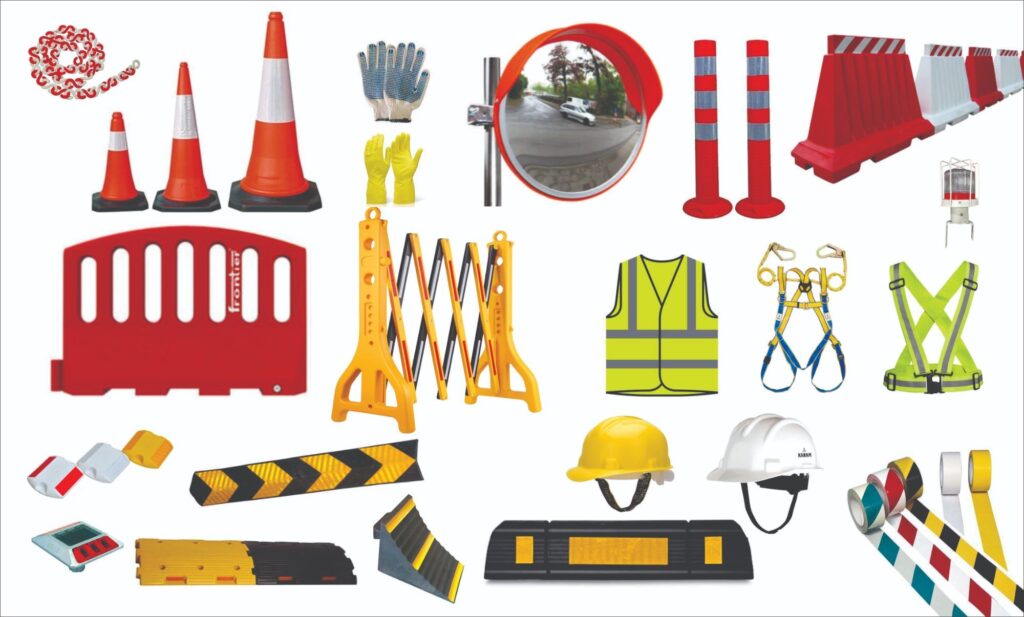
Reflective vests, jackets, and armbands are some of the most basic yet essential road safety products, especially for pedestrians, cyclists, and construction workers. The reflective materials used in these garments help increase visibility, particularly in low-light conditions or during night-time activities.

For instance, a pedestrian walking on a dimly lit road at night is much more likely to be seen by drivers if they wear a reflective vest or jacket. Similarly, construction workers wearing reflective gear are more visible to drivers, reducing the risk of accidents in roadwork zones.

  1. Road Signs and Signals

Road signs and signals are essential tools for controlling traffic and providing drivers with important information about road conditions, speed limits, hazards, and detours. These signs are often made of durable materials that can withstand the elements while remaining visible to drivers.

There are numerous types of road signs, including:

  • Warning signs: Indicate potential hazards such as sharp turns, pedestrian crossings, or slippery roads.
  • Regulatory signs: Provide rules that drivers must follow, such as speed limits, stop signs, and yield signs.
  • Informational signs: Provide helpful information like directions, parking locations, and gas stations.

Proper placement and maintenance of road signs are crucial to ensuring they serve their purpose effectively. Clear, visible signs reduce confusion and make driving safer for everyone.

  1. Speed Bumps and Humps

Speed bumps, humps, and rumble strips are road safety products designed to control the speed of vehicles in certain areas. These products are commonly found in school zones, residential neighborhoods, and parking lots where reduced speed is necessary to protect pedestrians and cyclists.

Speed bumps and humps force drivers to slow down, reducing the likelihood of accidents in high-risk areas. Similarly, rumble strips are often placed along highways to alert drivers if they are drifting out of their lane or approaching a dangerous curve.

  1. Traffic Barriers and Guardrails

Traffic barriers and guardrails are designed to prevent vehicles from leaving the road in case of a loss of control. These safety features are typically placed along highways, bridges, and dangerous curves where there is a higher risk of accidents.

Guardrails work by absorbing the energy from a collision and redirecting the vehicle back onto the road. In some cases, traffic barriers can also prevent vehicles from crashing into dangerous areas, such as steep slopes or bodies of water.

  1. Pedestrian Crossings and Signals

Pedestrian safety is a critical aspect of road safety, especially in urban areas where foot traffic is heavy. Pedestrian crossings, combined with signals like walk/don’t walk lights, help protect pedestrians from accidents while crossing busy streets.

In many cities, crosswalks are painted with high-visibility markings that make it clear where pedestrians are allowed to cross. These crossings are often equipped with signals that alert drivers to stop when pedestrians are crossing, ensuring the safety of those on foot.

  1. Safety Helmets

While often associated with motorcyclists, safety helmets are essential for a variety of road users, including cyclists, skateboarders, and even pedestrians in some high-risk areas. Helmets are designed to protect the head in the event of an accident, reducing the severity of injuries and potentially saving lives.

Cyclists, for example, are at a higher risk of head injury in the event of a fall or collision. A properly fitted helmet can make a significant difference in protecting the brain from damage, and many countries have implemented laws requiring helmets for cyclists.

  1. Emergency Kits

Emergency road safety kits are crucial products that can help drivers and passengers in the event of an accident or breakdown. These kits typically contain essential items like first aid supplies, road flares, warning triangles, and even jumper cables.

Having an emergency kit on hand can be the difference between life and death in some situations. In the case of a breakdown or accident, road flares and warning triangles can alert other drivers to the hazard, reducing the risk of further accidents.

  1. Vehicle Safety Features

Modern vehicles come equipped with a variety of road safety features designed to protect the occupants in the event of an accident. Some of these features include airbags, anti-lock braking systems (ABS), electronic stability control (ESC), and collision warning systems.

Although these features are built into vehicles, they are considered part of the broader category of road safety products, as they work in conjunction with road infrastructure and safety gear to protect drivers and passengers.

  1. Parking Sensors and Cameras

Parking sensors and cameras are increasingly common in modern vehicles, helping drivers navigate tight spaces and avoid collisions when parking. These products use sensors to detect nearby obstacles and alert the driver to potential hazards.

Parking cameras, often displayed on the vehicle’s dashboard or rearview mirror, provide a visual representation of the area behind the vehicle, giving the driver a better understanding of their surroundings.

The Role of Technology in Road Safety

Advancements in technology are continuously shaping the landscape of road safety products. For example, intelligent traffic management systems use sensors and cameras to monitor traffic flow, detect accidents, and adjust traffic lights in real-time to alleviate congestion.

Moreover, vehicle-to-vehicle (V2V) communication technology is making it possible for vehicles to communicate with each other and share information about road conditions, hazards, and traffic. This technology has the potential to reduce accidents by alerting drivers to dangers ahead.

The Future of Road Safety

As the world continues to urbanize, the need for effective road safety products will only grow. Governments and private organizations will need to continue investing in innovative solutions to ensure the safety of all road users. Smart traffic systems, autonomous vehicles, and improved road designs are just a few of the exciting advancements on the horizon.

Additionally, increased awareness about road safety will encourage the adoption of safer driving practices and the use of personal protective equipment like helmets and reflective clothing. Educational campaigns and road safety programs will play an essential role in spreading awareness and promoting safer habits on the road.

Conclusion

Road safety products are essential tools in reducing accidents and saving lives. From reflective vests to traffic barriers, these products provide crucial protection for drivers, pedestrians, cyclists, and construction workers. As technology advances, the future of road safety products looks promising, with innovations that promise even greater levels of protection and efficiency. By prioritizing road safety, society can make significant strides in reducing fatalities and injuries on the road.

 

20 GREAT TIPS FOR DECIDING ON AI TRADING20 GREAT TIPS FOR DECIDING ON AI TRADING

10 Tips For Evaluating The Quality Of Data And Sources In An Ai Stock Trading Predictor
When using an AI predictor is crucial to assess data quality and source. The quality and reliability of data can have a direct effect on the accuracy of predictions. Here are 10 top tips on how to evaluate data sources and quality.
1. Check data accuracy, completeness and accuracy
What’s the reason? Accurate and thorough information is the foundation for creating reliable models.
How to check the accuracy by checking data against numerous reliable sources (e.g. exchanges or financial databases). Make sure that all information is included, particularly for metrics that have a brief time frame.

2. Accuracy of data and frequency are crucial to take into consideration
The reason: Stock markets can be highly fluid. Data that is outdated could result in outdated predictions.
How: Confirm that your data is updated in real time or at a rate that fits your trading strategy. In the case of high-frequency trading, or intraday trading, second-bysecond data might be required. However, for long-term models, daily or weekly updates might suffice.

3. Check the credibility of the source and reliability
Why? The use of reliable sources lowers the possibility of using inaccurate or biased information that can alter forecasts.
How to use data that comes from trusted sources (e.g., Bloomberg, Reuters, NASDAQ) and avoid sources with potential biases. Verify that the sources are widely known and are able to demonstrate quality control measures.

4. Make sure that there is consistency across sources.
Unsympathetic information can create confusion and reduce the accuracy of predictive models.
Compare data from different sources to determine if there is alignment. If one source is consistently off, look for possible issues, like different methods of calculation or data collection techniques.

5. Identify data granularity and scope
Why: Achieving the right granularity, scope and detail makes sure that data is recorded without unnecessary noise.
What should you do: Ensure that the data granularity matches your forecast time horizon. For instance, if you are predicting daily prices, daily granularity is usually sufficient; however high-frequency trading models could require tick-level data. Check that the model’s scope includes relevant variables (e.g. price of stock volume, price, and economic indicators).

6. Review historical data coverage
Why is this? Accurate historical data allows for robust model training and dependable backtesting.
How to verify historical data that spans multiple market cycles including bull flat, bear, and flat markets. This allows the model adapt to changing conditions.

7. Make sure you are aware of the standards for data processing.
Why: Raw datasets can be prone to inconsistencies, noise or outliers that affect the model’s performance.
How: Examine how data was cleaned and normalized. Also, examine how data has been transformed. This includes strategies to deal with missing data, outliers, or any other changes. A reliable preprocessing process helps models to learn relevant patterns without being influenced by data errors.

8. Make sure to ensure Regulatory Compliance
Why is this? Because data that is not compliant can cause legal problems and fines.
How do you ensure that the information is in line with relevant laws (e.g. GDPR in Europe or SEC regulations in America). Make sure that all proprietary information is licensed properly and privacy-sensitive information is tamper-proofed.

9. Check Data Accessibility and Latency
What’s the reason? In real-time trade small delays could be detrimental to the speed of transactions and profits.
How do you determine the time it takes to process data (the delay from source to model) and make sure that it is compatible with the trading frequency you’re using. It is crucial to determine how easily the data can be accessed and whether this data can be seamlessly integrated into the AI prediction.

10. Take a look at alternative information for added insights
Why do alternative data (like sentiment from the news social media, or web traffic) adds predictive power to traditional data
How do you evaluate alternative data sources that may enhance the insight of your model. Ensure that these sources are also high-quality, reliable, and in line with your predictor’s input format and model architecture.
Following these suggestions, you will be able to assess the data quality and source of any AI forecasting model for trading stocks. This will allow you to avoid common errors and ensure that the model is reliable. Have a look at the top rated more for ai stocks for site recommendations including buy stocks, buy stocks, stock market online, market stock investment, stocks for ai, ai stock trading, ai trading software, artificial intelligence stocks, incite ai, stocks and investing and more.

10 Tips For Assessing Alphabet Stock Index Using An Ai Stock Trading Predictor
Alphabet Inc.’s (Google’s) stock performance can be predicted by AI models that are based on a thorough understanding of the economic, business, and market variables. Here are ten top tips to evaluate Alphabet Inc.’s stock efficiently using an AI trading system:
1. Alphabet Business Segments: Understand the Diverse Segments
What is the reason: Alphabet operates in multiple industries that include search (Google Search), advertising (Google Ads), cloud computing (Google Cloud) as well as hardware (e.g., Pixel, Nest).
How to: Be familiar with the revenue contributions for each segment. Knowing the drivers for growth in these sectors aids AI forecast the stock’s overall performance.

2. Incorporate Industry Trends as well as Competitive Landscape
Why: Alphabet’s performance is influenced by changes in the field of digital marketing, cloud computing and technology innovation as well as competitors from companies such as Amazon and Microsoft.
What should you do to ensure whether the AI models analyze relevant industry trend, like the growth of online ads as well as cloud adoption rates and changes in the customer’s behavior. Also, consider the performance of competitors as well as market share dynamics to get an accurate picture.

3. Earnings Reports The Critical Analysis
Why: Earnings announcements can cause significant price swings, especially for growth companies like Alphabet.
How: Check Alphabet’s quarterly earnings calendar, and analyze how previous results and guidance affect the stock’s performance. Also, consider analyst expectations when assessing the outlook for future earnings and revenue.

4. Utilize indicators of technical analysis
Why? Technical indicators can identify price patterns, reversal points and even momentum.
How to incorporate analytical tools like moving averages, Relative Strength Indexes (RSI), Bollinger Bands and so on. into your AI models. These can give valuable insight into determining the right moment to purchase and sell.

5. Macroeconomic Indicators
What’s the reason: Economic conditions such as inflation, interest rates, and consumer spending have a direct impact on Alphabet’s overall performance and ad revenue.
How: Incorporate relevant macroeconomic indicators into the model, for example consumption indicators, and unemployment rates to increase the accuracy of predictions.

6. Implement Sentiment Analysis
The reason: Stock prices can be affected by market sentiment, particularly in the technology industry in which public opinion and news are major variables.
How do you analyze sentiments from news articles as well as social media platforms, as well as investor reports. The AI model can be augmented by including sentiment data.

7. Monitor for Regulatory Developments
The reason: Alphabet faces scrutiny from regulators on antitrust concerns privacy and data security, which could influence the stock’s performance.
How: Stay updated on relevant legal and regulatory changes that could affect the business model of Alphabet. Be sure to consider the possible effects of regulatory actions when predicting changes in the stock market.

8. Testing historical data back to confirm it
The reason: Backtesting lets you to verify the AI model’s performance by comparing it to the past price fluctuations and other important events.
How to use historic Alphabet stocks to backtest the predictions of the model. Compare the predicted results with actual results to assess the model’s accuracy and reliability.

9. Monitor execution metrics in real-time
The reason: Efficacious execution of trades is essential to the greatest gains, particularly in volatile stocks such as Alphabet.
How to monitor real-time execution parameters like slippage and fill rates. How well does the AI model predict optimal entry- and exit-points for trades with Alphabet Stock?

10. Review Strategies for Risk Management and Position Sizing
What is the reason? Risk management is essential to protect capital. This is particularly the case in the volatile tech industry.
How to ensure the model includes strategies for position sizing and risk management based upon Alphabet’s stock volatility and overall portfolio risk. This approach helps mitigate potential losses while also maximizing the profits.
These tips will help you evaluate the AI prediction of stock prices’ ability to assess and predict Alphabet Inc.’s stock movements and to ensure that it remains up-to-date and accurate in the evolving market conditions. Read the top rated investing in a stock info for website info including best stocks for ai, best ai stocks, chart stocks, investment in share market, ai stocks, ai copyright prediction, best ai stocks, best ai stocks to buy now, ai stock picker, ai share price and more.

Stream Beyond Limits: The Evolution And Touch Of Iptv On World-wide Broadcast MediumStream Beyond Limits: The Evolution And Touch Of Iptv On World-wide Broadcast Medium

In Recent years, Internet Protocol Television(IPTV) has revolutionized the way audiences waste television , marking a considerable phylogenesis in worldwide broadcast medium. Unlike traditional wire and satellite services, IPTV delivers through the net, allowing viewing audience to get at a ten thousand of and on-demand content across various . This article explores the of IPTV, its field advancements, and its unsounded affect on the broadcasting landscape.

The Genesis of IPTV

IPTV 39;s roots can be traced back to the early 1990s when the intersection of television system and the internet began to take shape. Initially, the applied science was express and in the first place experimental, but as band internet became widely available in the early 2000s, IPTV began to emerge as a executable choice to traditional broadcast medium methods. Telecommunications companies recognized the potential of delivering television system over their present networks, leading to the first commercial message IPTV services.

Technological Advancements

The phylogeny of IPTV has been impelled by advancements in cyberspace speed, applied science, and user user interface design. The Parousia of high-speed band and fiber-optic networks has allowed for higher-quality cyclosis and the saving of more channels. Additionally, algorithms have improved, facultative providers to channelise high-definition(HD) content without requiring immoderate bandwidth.

User go through has also transformed importantly. Modern IPTV platforms volunteer features such as time-shifting, which allows viewers to intermit and rewind live TV, and catch-up services that let users watch missed episodes on demand. The integrating of hurt engineering science has further enhanced user involution, with applications and interfaces that personalise wake experiences.

The Rise of Over-the-Top(OTT) Services

The growth of over-the-top(OTT) services, which straight over the internet without the need for traditional broadcast medium substructure, has significantly influenced the IPTV landscape painting. Platforms like Netflix, Hulu, and Amazon Prime Video have metamorphic witness expectations, accenting on-demand access to . canadian iptv providers have altered by incorporating synonymous features, offer subscription-based models that allow for tractability and a wider survival of the fittest of programing.

These OTT services have also encouraged IPTV providers to introduce in their content offerings. The demand for master copy programing has soared, leadership to investments in exclusive shows and movies that draw in subscribers. As a result, the line between traditional broadcasting and IPTV continues to blur, with many IPTV services now producing high-quality that rivals mainstream networks.

Global Impact and Accessibility

One of the most significant advantages of IPTV is its ability to strain a world audience. Unlike traditional broadcast medium methods constrained by geographic boundaries, IPTV can deliver content to anyone with an internet connection. This handiness has democratized media expenditure, allowing viewers in remote or underserved areas to get at diverse programming that was previously unobtainable to them.

Moreover, IPTV has parented a new era of localized content. Many IPTV providers cater to particular demographics or regional audiences, offering scheduling in two-fold languages and direction on culturally under consideration content. This has authorised local creators and producers to partake in their stories, enriching the international media landscape.

Challenges and Regulatory Considerations

Despite its many advantages, IPTV faces several challenges. Issues connate to copyright, content licensing, and restrictive compliance stay critical concerns. As IPTV providers often run across two-fold jurisdictions, navigating these valid frameworks can be complex. Additionally, the speedy phylogeny of engineering science necessitates nonstop version and invention, which can stress resources for small providers.

The Future of IPTV

Looking ahead, the hereafter of IPTV appears bright, fueled by current advancements in technology and dynamic consumer behaviors. The integration of staged news and simple machine eruditeness will likely heighten personalization, allowing viewing audience to divulge that aligns with their preferences more intuitively. Furthermore, the rise of 5G technology promises to ameliorate streaming timber and reduce latency, enhancing the overall viewing undergo.

In conclusion, IPTV has emerged as a unnerving player in the world broadcast medium arena, reshaping how content is delivered and consumed. Its evolution reflects broader trends in applied science and media consumption, and its touch on is felt across the Earth, democratizing access to and fostering discernment exchange. As the landscape continues to develop, IPTV will undoubtedly play a important role in shaping the futurity of broadcast medium.