Day: November 6, 2025

Bandar Togel: A Popular Online Lottery GameBandar Togel: A Popular Online Lottery Game

In recent years, online lottery games have become very popular in many countries, especially in Asia. One of the most famous games is called Bandar Togel. This game has attracted millions of players who enjoy trying their luck with numbers and hoping to win big prizes. In this article, we will explain what Bandar situs toto is, how it works, and why so many people love playing it.

What is Bandar Togel?

Bandar Togel is an online lottery game that involves guessing numbers. The word “Bandar” means a dealer or host, while “Togel” comes from “Toto Gelap,” which means dark lottery in Indonesian. This game has a long history in Indonesia and other Asian countries. In the past, people played it in secret because it was not legal. But now, thanks to the internet, players can easily enjoy this game online through different websites and platforms.

In Bandar Togel, players choose a series of numbers and place bets. The numbers are drawn at random, and if the numbers chosen by the player match the numbers drawn, the player wins a prize. The size of the prize depends on how many numbers the player guesses correctly and how much money they bet.

How to Play Bandar Togel

Playing Bandar Togel is very simple. First, players need to register on a trusted Bandar Togel website. After registering, they can deposit money into their account to start playing. Most websites accept various payment methods, such as bank transfers, digital wallets, and mobile payments.

Next, players choose the type of bet they want to place. There are different betting options in Bandar Togel, such as:

2D (Two Digits): Guessing the last two digits of the winning number.

3D (Three Digits): Guessing the last three digits of the winning number.

4D (Four Digits): Guessing all four digits of the winning number.

The more digits a player guesses, the higher the prize. After choosing the numbers and placing the bet, the player waits for the draw result. If the numbers match, the player wins.

Why Bandar Togel is So Popular

There are many reasons why Bandar Togel has become one of the most popular online games. First, it is very easy to play. Even beginners can quickly learn how the game works. The rules are simple, and the process of choosing numbers and placing bets is fast and convenient.

Another reason for its popularity is the chance to win big prizes with small bets. Many players like the idea of turning a small amount of money into a large prize by simply guessing a few numbers. Some online platforms also offer bonus promotions and discounts, making the game even more attractive.

The availability of Bandar Togel online also makes it easy for people to play anytime and anywhere. With a smartphone or computer, players can access the game and enjoy it without going to a physical location. This convenience has helped the game reach a larger audience.

Choosing a Trusted Bandar Togel Website

When playing Bandar Togel, it is very important to choose a trusted and reliable website. There are many online platforms available, but not all of them are safe. A good Bandar Togel site should have official licenses, good security systems, and positive reviews from players. Trusted websites also offer quick deposit and withdrawal services and excellent customer support.

Conclusion

Bandar Togel is a fun and exciting online lottery game that has captured the interest of many people. Its simple rules, affordable bets, and big prizes make it a favorite among lottery lovers. By choosing a trusted website and playing responsibly, players can enjoy the thrill of Bandar Togel while having a chance to win attractive rewards.

The Conscious Crm When Your Develops A Sixth FeelThe Conscious Crm When Your Develops A Sixth Feel

For decades, Customer Relationship Management has been a integer filing cabinet a reactive tool for logging interactions. But in 2024, a new substitution class is rising, one where the gohighlevel crm is no longer just a system of rules of record but a system of tidings, prevision, and almost magical prospicience. This isn’t about automation; it’s about imbuing your client data with a form of that predicts needs, prevents churn, and personalizes experiences at a take down that feels . Recent studies show that 68 of customers expect all experiences to be personal, and these conscious systems are the only way to scale that .

The Alchemy of Predictive Empathy

The magic lies in Predictive Empathy. Modern CRMs, powered by generative AI and deep erudition algorithms, no yearner just get across what a client did; they simulate why they did it and what they will need next. They analyze persuasion in subscribe tickets, product exercis patterns with market events, and even work on inorganic data from emails and calls to establish a holistic, moral force visibility of a client’s feeling and byplay journey.

  • Anticipating a client’s frustration with a boast before they even spell a subscribe ticket.
  • Suggesting a in question upsell exactly when the customer’s employment data indicates they’ve outgrown their flow plan.
  • Automatically drafting a personalized replenishment offer that addresses the node’s unique business challenges mentioned in past calls.

Case Study: The Proactive Pivot at”Veridian Dynamics”

Veridian, a B2B SaaS company, watched as a key client’s employment of their analytics splashboard plummeted by 40 over two weeks. Their sentient CRM didn’t just flag the risk; it -referenced the data with news alerts and revealed the client’s industry had just been hit with new compliance regulations. Before the client could even call to cancel, Veridian’s account director reached out with a pre-packaged proposition for their compliance faculty and a custom migration plan. The leave? Not only was the churn prevented, but the account grew by 22.

Case Study:”Brew & Bean’s” Hyper-Personalized Marketing

For the local anaesthetic java roastery Brew & Bean, their CRM’s thaumaturgy was in its little-targeting. The system noticed that a section of customers who bought Ethiopian Yirgacheffe beans also ofttimes purchased a particular, dismount-bodied pour-over brewer. It then mechanically generated a hyper-niche netmail take the field to just those customers, offering a express-run Yirgacheffe from a new little-lot, with a perceptive -sell on filters for their beer maker. The take the field achieved a 45 open rate and regenerate at 15, a visualize unhearable of in the retail sector.

The Ethical Enchantment: A Double-Edged Sword

This new world power requires a strong ethical comprehend. The line between charming and offensive is thin. A CRM that suggests a gestation-related production before a syndicate has declared the news, or one that leverages subjective asperity data for a gross sales opportunity, can in a flash ruin bank. The most sophisticated CRMs in 2024 are therefore being well-stacked with”ethical AI layers” obvious protocols that rule how data is used and ensure the thaumaturgy serves the customer, not just the pot.

The future of CRM is not in big databases, but in wiser ones. It s a shift from a reactive tool to a proactive mate, a watch glass ball high-powered by data and premeditated with a singular form, magic resolve: to sympathize your client so profoundly that you can serve their futurity needs in the submit minute.

How to Choose Amplifiers and Comparators Without Getting Overwhelmed?How to Choose Amplifiers and Comparators Without Getting Overwhelmed?

Introduction

Imagine you’re working on your latest electronics project, surrounded by components and schematics. You have two crucial choices to make: amplifiers and comparators. These carefully designed circuits—especially the operational amplifier—play a major role in enhancing signal quality. But with so many options, you might find yourself wondering: how do I navigate through the noise to pinpoint the right circuit for my needs?

In this guide, we’ll attempt to break down some of the complexities and hidden pain points associated with selecting the right amplifiers and comparators for your applications. Let’s dive in.

Common Flaws in Traditional Solutions

It’s a known fact that in traditional electronic design, users often face challenges due to oversimplified solutions. Many engineers assume more power translates directly to better performance, but this misconception can lead novices down a rabbit hole. Where the typical “more is better” mindset falters is in practical applications where edge computing nodes rely on precision. That’s where operational amplifiers come in, offering a subtle balance of amplification and accuracy. Understanding their role is fundamental; without it, you might end up designing circuits that perform poorly under specific conditions.

When choosing an operational amplifier, consider the slew rate and bandwidth. An amplifier’s performance can diminish drastically if these factors are overlooked. Look, it’s simpler than you think, but little details matter. The right specifications can help avoid the frustration of signal distortion or poor response time, enabling a smoother design process and fewer headaches later on.

What Innovations Are on the Horizon?

Looking forward, advancements in technology principles like integrated circuit designs promise to reshape how we think about amplifiers and comparators. For example, a recent study showcased how operational amplifiers are now being integrated with smart sensors to create more efficient feedback systems. These innovations not only enhance signal integrity but also reduce power consumption. As we see these new operational amplifiers hit the market, it’s essential to do your homework; they may significantly alter project outcomes compared to older models.

Brand new designs allow for a level of fine-tuning that was previously unimaginable. Consider the faster operational speeds and improved noise performance—if you overlook these innovations, you risk settling for outdated technology. It’s important to stay ahead of the curve to boost your project’s reliability. And as electrical engineering continues to evolve, recognizing these trends can provide you with a competitive edge.

Evaluating Your Options

As you engage with different solutions, three key evaluation metrics can aid in selecting the best amplifier or comparator: performance characteristics, integration capabilities, and cost-effectiveness. First, delve into performance specs and ensure they align with your project’s requirements—this will save you from potential bottlenecks. Second, consider how well each component will integrate with your existing systems, as compatibility can greatly impact functionality. Lastly, assess the cost; while high-end components promise superior features, balance is key to staying within budget. Remember, making informed choices can lead to substantial long-term savings.

Take heart—building a successful circuit doesn’t have to be complex or burdensome. Each layer of understanding you gain from these metrics adds value to your engineering prowess. Ultimately, as you navigate this landscape, remember that embracing advanced solutions leads to more refined outcomes in your projects. For quality components, explore options from UniBetter—they offer practical resources that can simplify your decision-making process.

How to Dodge Traps When Choosing Cell to Pack vs. Module Builds?How to Dodge Traps When Choosing Cell to Pack vs. Module Builds?

Introduction: A Technical Tale with a Hint of Wonder

Cell-to-pack sounds simple: remove modules, place cells straight into the pack, and let structure do the rest. In practice, cell to pack turns a layered battery stack into one continuous energy body—sleek, dense, and a little mythical. Picture a busy line at shift start, robots tracing arcs like comet tails, while dashboards show a 12–20% bump in energy density and a leaner bill of materials. Yet beneath that glow sit stubborn facts: thermal management still rules, busbar paths still matter, and BMS logic still calls the shots. What gets better, what gets brittle, and what do we trade for every gram saved?

We see fewer parts and shorter wiring looms. We also see new stress points, like heat gradients across wide plates, and local hotspots that can sneak up during fast charge. So the question is simple: where do wins turn into risk, and how do we keep the magic without waking the dragon? (Yes, batteries have dragons—mostly thermal ones.) Let’s step through the cracks and the shine, then sort the wisdom from the wishful thinking—onward.

Part 2: The Hidden Flaws in Traditional Module Stacks

Where do legacy modules stumble?

Start here: a cell module pack inserts frames, lids, and fasteners between the raw cells and the pack shell. Each layer steals volume and adds mass. Every added busbar and harness run grows resistance and complexity for the BMS. That means more heat in charge spikes, longer takt, and more points to fail—funny how that works, right? The module wall also slows heat flow, so thermal management has to work harder to keep deltas tight across the array. When power converters demand high surge, those extra interfaces waste precious watts as loss, and steady-state life takes a quiet hit. Direct words, simple truth.

Look, it’s simpler than you think. Traditional modules promise serviceability, but the real field work often means pulling the whole pack anyway. You chase a weak unit, yet the root cause sits in uneven compression or a tired interface pad. Meanwhile, state-of-charge drift creeps when sensor lines run long, so cell balancing gets noisy. Edge cases pile up in cold starts and fast-charge ramps. In short: modules cushion risk on paper, then hand it back as distributed friction—extra busbars, more gaskets, fussy torque specs. That is why many teams pivot to denser layouts and fewer seams. They want predictable heat paths, shorter loops, and tighter control under the BMS umbrella.

Part 3: Principles for Next-Gen Pack Architecture

What’s Next

Now compare the new wave. Cell-to-pack principles aim to flatten the stack, widen conduction planes, and shorten electrical paths. The structural tray becomes a heat highway. Compression frames set uniform pressure, so prismatic cells breathe evenly. Fewer interfaces reduce contact resistance, which helps both surge power and cycle life. With a modern cell module pack approach—built around integrated sensing—BMS analytics see cleaner signals. That tightens cell balancing and keeps state-of-health models honest. Add smart coolant channels and tabless current paths, and the pack shrinks while staying calm under load. The idea is not magic; it is physics with nicer manners.

cell to pack

Yet principles need proof. Aim for even temperature across the slab (not just average), stable impedance during high C-rate events, and low stray inductance in your bus structure. Use short, wide conductors, and isolate faults at the slice level—fast. If you still need service access, design sub-pack “islands” that lift without undoing the world. Keep pack density high, but guard thermal runaway paths with vent logic and robust seals. And yes—sometimes the best design brings fewer parts and better service at once—funny how that works, right?

Before you choose, use three clear metrics. One: pack-level energy density (Wh/kg and Wh/L) at a defined thermal delta under fast charge; target a cell-to-skin spread under 5°C. Two: electrical path quality; measure total loop resistance and inductance from cell tab to DC link, including busbar joints. Three: manufacturability under real takt; count critical torque points, verify seal integrity rates, and track rework minutes per pack. If a solution scores strong on these, it earns the floor space. If not, it stays a sketch. For teams who want a steady guide—and a quiet line that still moves fast—there is LEAD.

Is It Smart to Let a Pallet Stacker Set the Pace? A Comparative Safety CheckIs It Smart to Let a Pallet Stacker Set the Pace? A Comparative Safety Check

Kickoff: The Rush, the Risks, and the Big Ask

Picture your busiest hour on the dock. Orders spike, aisles tighten, and human focus stretches thin. The pallet stacker sits like a sprinter in the blocks, waiting for the gun. Numbers don’t lie: most slowdowns trace back to handoffs, blind turns, and empty travel loops. Some studies peg corner incidents and misreads at over 20% of all close calls—funny how that works, right? So here’s the real question: can you hit speed and stay safe, without trading one for the other? I’m telling you—yes. But it takes intent, clear rules, and the right mix of machine and method (not just more muscle). We’ll dive into what makes the floor safer, what gets in the way, and how to read the signals before they break your flow. Ready to train smarter, not harder? Let’s move.

Beyond Part 1: The Hidden Friction You Can’t See—Until You Can

Where do the old fixes fail?

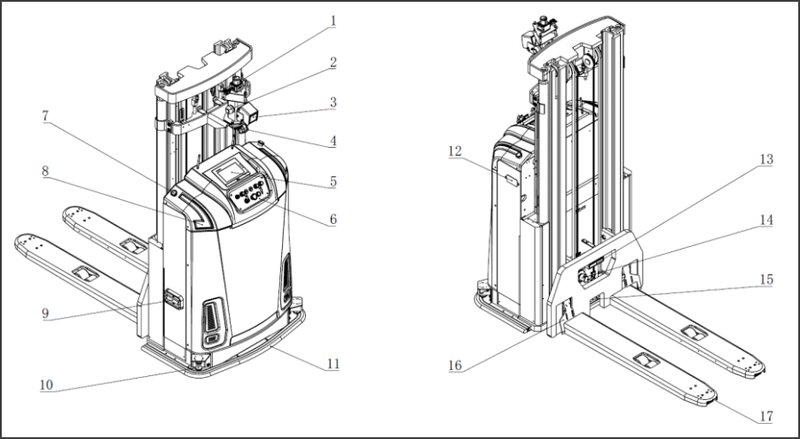
In Part 1, we talked about basic safety habits and clear traffic rules. Now let’s go a layer deeper and get technical. The shift to an automated pallet stacker helps most where manual work hits invisible drag. Look, it’s simpler than you think. Human operators fight micro-delays at corners, inconsistent load height, and battery dips that show up as late-cycle strain. Without LiDAR coverage and reliable SLAM maps, those blind zones don’t announce themselves. Hand signals and mirror checks help, but they don’t scale when three aisles converge. And that’s before we talk about data gaps—no timestamps, no path heatmaps, no way to tune routes.

Legacy stopgaps also hide ergonomic pain. Long shifts build fatigue, and fatigue builds error. A manual cart might skate through once, then stumble the next hour. Torque spikes feel small but add up in tight turns. PLC logic without modern geofencing can’t adapt to pop-up obstacles. And if your WMS can’t speak cleanly to edge computing nodes, you lose the chance to reroute on the fly. The result is choppy motion, jittery queues, and too many “almosts.” Power converters, charge windows, and uneven floors only amplify the noise. The right fix reduces noise at the source, not after the incident report.

Comparative Lens: New Rules, Real Gains

What’s Next

Here’s the forward look. Today’s automated pallet stacker relies on a tight loop: LiDAR plus depth cameras for perception, SLAM for live maps, and geofencing to define “safe by design.” Edge computing nodes process paths in milliseconds; the WMS feeds priorities; the PLC enforces stops with deterministic timing. Instead of “do your best,” the machine runs to a spec. Compare that to a manual stacker: one tool, many behaviors. Now, every curve gets a known radius, every load shift a torque envelope, every aisle a speed cap tied to visibility. A mid-size 3PL that switched two aisles to autonomous moves saw near-misses drop by a third, and empty travel cut by double digits—and nobody misses the old battery charts. The stacker became a metronome. People focused on exceptions, not babysitting.

Let’s keep it practical and advisory. If you’re weighing options, track three metrics. First, safety integrity in mixed traffic: does the system prove its stops and yields under crowding, not just in demos? Second, utilization under load variance: can it maintain line speed with odd pallets, varied heights, and weekend staffing? Third, integration latency: how fast do WMS updates change the path, and can the stacker recover from map drift without a reboot? Summing up, we learned that consistency beats heroics, data beats hunches, and speed follows from control—not the other way around. Choose the system that reduces noise at the source and makes smart the default. When in doubt, benchmark on your floor, with your loads, and your blind corners. For a deeper technical view grounded in real deployments, see SEER Robotics.