Category: Business

How to Choose Amplifiers and Comparators Without Getting Overwhelmed?How to Choose Amplifiers and Comparators Without Getting Overwhelmed?

Introduction

Imagine you’re working on your latest electronics project, surrounded by components and schematics. You have two crucial choices to make: amplifiers and comparators. These carefully designed circuits—especially the operational amplifier—play a major role in enhancing signal quality. But with so many options, you might find yourself wondering: how do I navigate through the noise to pinpoint the right circuit for my needs?

In this guide, we’ll attempt to break down some of the complexities and hidden pain points associated with selecting the right amplifiers and comparators for your applications. Let’s dive in.

Common Flaws in Traditional Solutions

It’s a known fact that in traditional electronic design, users often face challenges due to oversimplified solutions. Many engineers assume more power translates directly to better performance, but this misconception can lead novices down a rabbit hole. Where the typical “more is better” mindset falters is in practical applications where edge computing nodes rely on precision. That’s where operational amplifiers come in, offering a subtle balance of amplification and accuracy. Understanding their role is fundamental; without it, you might end up designing circuits that perform poorly under specific conditions.

When choosing an operational amplifier, consider the slew rate and bandwidth. An amplifier’s performance can diminish drastically if these factors are overlooked. Look, it’s simpler than you think, but little details matter. The right specifications can help avoid the frustration of signal distortion or poor response time, enabling a smoother design process and fewer headaches later on.

What Innovations Are on the Horizon?

Looking forward, advancements in technology principles like integrated circuit designs promise to reshape how we think about amplifiers and comparators. For example, a recent study showcased how operational amplifiers are now being integrated with smart sensors to create more efficient feedback systems. These innovations not only enhance signal integrity but also reduce power consumption. As we see these new operational amplifiers hit the market, it’s essential to do your homework; they may significantly alter project outcomes compared to older models.

Brand new designs allow for a level of fine-tuning that was previously unimaginable. Consider the faster operational speeds and improved noise performance—if you overlook these innovations, you risk settling for outdated technology. It’s important to stay ahead of the curve to boost your project’s reliability. And as electrical engineering continues to evolve, recognizing these trends can provide you with a competitive edge.

Evaluating Your Options

As you engage with different solutions, three key evaluation metrics can aid in selecting the best amplifier or comparator: performance characteristics, integration capabilities, and cost-effectiveness. First, delve into performance specs and ensure they align with your project’s requirements—this will save you from potential bottlenecks. Second, consider how well each component will integrate with your existing systems, as compatibility can greatly impact functionality. Lastly, assess the cost; while high-end components promise superior features, balance is key to staying within budget. Remember, making informed choices can lead to substantial long-term savings.

Take heart—building a successful circuit doesn’t have to be complex or burdensome. Each layer of understanding you gain from these metrics adds value to your engineering prowess. Ultimately, as you navigate this landscape, remember that embracing advanced solutions leads to more refined outcomes in your projects. For quality components, explore options from UniBetter—they offer practical resources that can simplify your decision-making process.

How to Dodge Traps When Choosing Cell to Pack vs. Module Builds?How to Dodge Traps When Choosing Cell to Pack vs. Module Builds?

Introduction: A Technical Tale with a Hint of Wonder

Cell-to-pack sounds simple: remove modules, place cells straight into the pack, and let structure do the rest. In practice, cell to pack turns a layered battery stack into one continuous energy body—sleek, dense, and a little mythical. Picture a busy line at shift start, robots tracing arcs like comet tails, while dashboards show a 12–20% bump in energy density and a leaner bill of materials. Yet beneath that glow sit stubborn facts: thermal management still rules, busbar paths still matter, and BMS logic still calls the shots. What gets better, what gets brittle, and what do we trade for every gram saved?

We see fewer parts and shorter wiring looms. We also see new stress points, like heat gradients across wide plates, and local hotspots that can sneak up during fast charge. So the question is simple: where do wins turn into risk, and how do we keep the magic without waking the dragon? (Yes, batteries have dragons—mostly thermal ones.) Let’s step through the cracks and the shine, then sort the wisdom from the wishful thinking—onward.

Part 2: The Hidden Flaws in Traditional Module Stacks

Where do legacy modules stumble?

Start here: a cell module pack inserts frames, lids, and fasteners between the raw cells and the pack shell. Each layer steals volume and adds mass. Every added busbar and harness run grows resistance and complexity for the BMS. That means more heat in charge spikes, longer takt, and more points to fail—funny how that works, right? The module wall also slows heat flow, so thermal management has to work harder to keep deltas tight across the array. When power converters demand high surge, those extra interfaces waste precious watts as loss, and steady-state life takes a quiet hit. Direct words, simple truth.

Look, it’s simpler than you think. Traditional modules promise serviceability, but the real field work often means pulling the whole pack anyway. You chase a weak unit, yet the root cause sits in uneven compression or a tired interface pad. Meanwhile, state-of-charge drift creeps when sensor lines run long, so cell balancing gets noisy. Edge cases pile up in cold starts and fast-charge ramps. In short: modules cushion risk on paper, then hand it back as distributed friction—extra busbars, more gaskets, fussy torque specs. That is why many teams pivot to denser layouts and fewer seams. They want predictable heat paths, shorter loops, and tighter control under the BMS umbrella.

Part 3: Principles for Next-Gen Pack Architecture

What’s Next

Now compare the new wave. Cell-to-pack principles aim to flatten the stack, widen conduction planes, and shorten electrical paths. The structural tray becomes a heat highway. Compression frames set uniform pressure, so prismatic cells breathe evenly. Fewer interfaces reduce contact resistance, which helps both surge power and cycle life. With a modern cell module pack approach—built around integrated sensing—BMS analytics see cleaner signals. That tightens cell balancing and keeps state-of-health models honest. Add smart coolant channels and tabless current paths, and the pack shrinks while staying calm under load. The idea is not magic; it is physics with nicer manners.

cell to pack

Yet principles need proof. Aim for even temperature across the slab (not just average), stable impedance during high C-rate events, and low stray inductance in your bus structure. Use short, wide conductors, and isolate faults at the slice level—fast. If you still need service access, design sub-pack “islands” that lift without undoing the world. Keep pack density high, but guard thermal runaway paths with vent logic and robust seals. And yes—sometimes the best design brings fewer parts and better service at once—funny how that works, right?

Before you choose, use three clear metrics. One: pack-level energy density (Wh/kg and Wh/L) at a defined thermal delta under fast charge; target a cell-to-skin spread under 5°C. Two: electrical path quality; measure total loop resistance and inductance from cell tab to DC link, including busbar joints. Three: manufacturability under real takt; count critical torque points, verify seal integrity rates, and track rework minutes per pack. If a solution scores strong on these, it earns the floor space. If not, it stays a sketch. For teams who want a steady guide—and a quiet line that still moves fast—there is LEAD.

Is It Smart to Let a Pallet Stacker Set the Pace? A Comparative Safety CheckIs It Smart to Let a Pallet Stacker Set the Pace? A Comparative Safety Check

Kickoff: The Rush, the Risks, and the Big Ask

Picture your busiest hour on the dock. Orders spike, aisles tighten, and human focus stretches thin. The pallet stacker sits like a sprinter in the blocks, waiting for the gun. Numbers don’t lie: most slowdowns trace back to handoffs, blind turns, and empty travel loops. Some studies peg corner incidents and misreads at over 20% of all close calls—funny how that works, right? So here’s the real question: can you hit speed and stay safe, without trading one for the other? I’m telling you—yes. But it takes intent, clear rules, and the right mix of machine and method (not just more muscle). We’ll dive into what makes the floor safer, what gets in the way, and how to read the signals before they break your flow. Ready to train smarter, not harder? Let’s move.

Beyond Part 1: The Hidden Friction You Can’t See—Until You Can

Where do the old fixes fail?

In Part 1, we talked about basic safety habits and clear traffic rules. Now let’s go a layer deeper and get technical. The shift to an automated pallet stacker helps most where manual work hits invisible drag. Look, it’s simpler than you think. Human operators fight micro-delays at corners, inconsistent load height, and battery dips that show up as late-cycle strain. Without LiDAR coverage and reliable SLAM maps, those blind zones don’t announce themselves. Hand signals and mirror checks help, but they don’t scale when three aisles converge. And that’s before we talk about data gaps—no timestamps, no path heatmaps, no way to tune routes.

Legacy stopgaps also hide ergonomic pain. Long shifts build fatigue, and fatigue builds error. A manual cart might skate through once, then stumble the next hour. Torque spikes feel small but add up in tight turns. PLC logic without modern geofencing can’t adapt to pop-up obstacles. And if your WMS can’t speak cleanly to edge computing nodes, you lose the chance to reroute on the fly. The result is choppy motion, jittery queues, and too many “almosts.” Power converters, charge windows, and uneven floors only amplify the noise. The right fix reduces noise at the source, not after the incident report.

Comparative Lens: New Rules, Real Gains

What’s Next

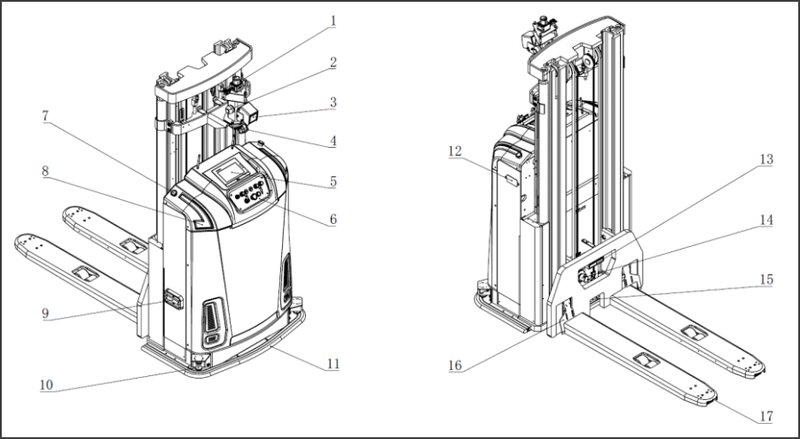
Here’s the forward look. Today’s automated pallet stacker relies on a tight loop: LiDAR plus depth cameras for perception, SLAM for live maps, and geofencing to define “safe by design.” Edge computing nodes process paths in milliseconds; the WMS feeds priorities; the PLC enforces stops with deterministic timing. Instead of “do your best,” the machine runs to a spec. Compare that to a manual stacker: one tool, many behaviors. Now, every curve gets a known radius, every load shift a torque envelope, every aisle a speed cap tied to visibility. A mid-size 3PL that switched two aisles to autonomous moves saw near-misses drop by a third, and empty travel cut by double digits—and nobody misses the old battery charts. The stacker became a metronome. People focused on exceptions, not babysitting.

Let’s keep it practical and advisory. If you’re weighing options, track three metrics. First, safety integrity in mixed traffic: does the system prove its stops and yields under crowding, not just in demos? Second, utilization under load variance: can it maintain line speed with odd pallets, varied heights, and weekend staffing? Third, integration latency: how fast do WMS updates change the path, and can the stacker recover from map drift without a reboot? Summing up, we learned that consistency beats heroics, data beats hunches, and speed follows from control—not the other way around. Choose the system that reduces noise at the source and makes smart the default. When in doubt, benchmark on your floor, with your loads, and your blind corners. For a deeper technical view grounded in real deployments, see SEER Robotics.

Can Smart Counter Design Solve Salon Check-In Chaos?Can Smart Counter Design Solve Salon Check-In Chaos?

A Rush You Know Too Well

Friday hits at 4 p.m., and the lobby fills like rain in a tin roof. Reception Desks are the front line where calm flips to crowd in a blink. If the hair salon reception desk can’t guide the flow, tickets stack, stylists wait, and clients sigh (wi, nou fè eksperyans sa). Industry snapshots suggest up to 35% of perceived wait time comes from unclear wayfinding, slow PoS steps, and slack cable management. Another 2–4 minutes per guest often slip away to card terminals, pen hunts, or “where do I sign?” questions. That’s real money, cheri. And when the counter height fights ADA compliance, you add friction you can’t see but guests can feel. So here’s the ask: if we treat the desk like a tiny operations hub—tight geometry, clean sight lines, predictable actions—can we cut the chaos without cutting the vibe? Look close, because the answer starts with how the desk handles people, power, and paperwork. Now, let’s step under the hood and get specific.

Under the Gloss: The Real Pain Points at the Salon Desk

Where Do Bottlenecks Hide?

Most salons blame “busy season,” but the snag lives in small details. A glossy counter with no transaction counter ledge makes payment awkward. A PoS terminal placed outside ergonomic reach zones slows every tap and swipe. Power bricks and power converters tangle underfoot, so staff bend and fumble. Cable management? Often an afterthought, so cords loop across the work zone and snag bags—funny how that works, right? Then there’s height: if the surface ignores ADA compliance, check-in turns into a lean-over dance that feels off to guests in wheelchairs. The result is not one big error, but twenty tiny frictions that add up to minutes and mood. Look, it’s simpler than you think: map the most common motions—greet, check-in, schedule, pay—and design the counter for those moves first, looks second.

Paper forms still live beside slick screens, which splits attention. Stylists walk over to translate because the screen faces the wrong way, so you lose flow. Without zoned storage, brushes and retail bags drift into the welcome space. And a single narrow pass-through forces staff to sidestep each other all day. Add a pen that goes missing and a chip reader that wobbles, and your “premium” first impression gets shaky. A purpose-built hair salon reception desk solves this by setting micro-stations: one spot for intake, one for payment, one for retail. Each station gets its own cable channel, a shallow drawer for essentials, and a clear path to the back of house. Not flashy—just honest workflow design that spreads the load and makes the line move.

From Static Counters to Smart Hubs

What’s Next

The next wave treats the desk like a light-tech node, not just a pretty slab. Think modest hardware, strong layout, and clear signals. A modern reception desk can hide edge computing nodes that run a queue screen and trigger workflow automation—no heavy servers, no drama. Pair that with an RFID badge reader for stylist check-ins, and the schedule updates without a word. Sensors can nudge a small welcome display when people approach, while soft under-glow points guests toward the sign-in area (no shouting across the room). Acoustic paneling under the counter calms card-terminal beeps. A kick-space channel moves cables off the floor, so carts and chairs glide clean. This is not sci-fi; it’s small upgrades that act together—wild but true.

Let’s compare the before and after. In the old setup, a single shared screen becomes a choke point; in the new plan, dual screens split tasks: one client-facing, one staff-facing, so check-in and payment don’t collide. Old desk: power daisy-chains and trips breakers; new desk: isolated power bays with labeled outlets and a tidy return panel. Old: staff twist to grab bags; new: a side pullout keeps retail within ergonomic reach zones. You don’t need a giant budget, just a clear checklist and staged changes. The payoff shows up in three places: shorter handoffs, steadier eye contact, and fewer “umm, where is…?” moments. When the counter behaves like a guide, your team spends less time fixing the desk and more time serving people.

How to Choose the Right Path—Without Guesswork

First, measure flow efficiency: time from “hello” to “done.” Track it for a week, upgrade one element, and track it again. Even a 20–30 second cut per guest builds real capacity. Second, validate ergonomics and access: ensure ADA compliance for surface height and knee clearance, plus a clean, forward-facing line of sight for both staff and guests. Third, check tech readiness: does the desk support your PoS terminal, receipt printer, and low-heat power converters on isolated circuits, with expansion space for one small node or display later? Keep it practical, keep it human, and the room will feel lighter the very next rush. For deeper specs and layout thinking from folks who live this craft, see M2-Retail.

The Best Home Workout: Your Complete Guide To Fitness Without The GymThe Best Home Workout: Your Complete Guide To Fitness Without The Gym

In today’s fast-paced world, finding time to visit the gym can be challenging. However, staying fit doesn’t always require expensive memberships or fancy equipment. The best home workout routines allow you to achieve incredible results using minimal space and simple exercises. Whether you’re aiming to lose weight, build muscle, or improve your overall health, working out at home can be just as effective as hitting the gym—if done right.

Why Choose Home Workouts?

Home workouts offer unmatched convenience and flexibility. You can exercise anytime—morning, afternoon, or night—without worrying about crowded gyms or time constraints. There’s no need to travel, wait for machines, or adjust to other people’s schedules. This makes it easier to stay consistent, which is the key to long-term fitness success.

Another major advantage of home workouts is cost-effectiveness. You don’t have to invest in expensive equipment or memberships. A simple yoga mat, a pair of dumbbells, or even just your body weight is enough to get started. Plus, home workouts allow you to design a routine that fits your personal fitness goals and comfort level.

The Essentials of the Best Home Workout

A well-balanced home workout should include a mix of cardio, strength training, flexibility, and core exercises. This ensures you build endurance, increase muscle tone, and improve overall body function. Here are the essential elements to include in your home fitness plan:

Warm-Up:

Always begin your session with a proper warm-up to prepare your muscles and joints. Simple movements like arm circles, jumping jacks, and light jogging in place for five minutes can increase blood flow and prevent injuries.

Cardio Exercises:

Cardio is essential for burning calories and improving heart health. You can easily do cardio at home without a treadmill. Try high knees, mountain climbers, jumping jacks, or dancing to your favorite music. Even skipping rope for 10 minutes can be a powerful calorie-burner.

Strength Training:

Strength exercises help tone muscles and boost metabolism. Bodyweight workouts such as push-ups, squats, lunges, and planks are extremely effective. If you have resistance bands or dumbbells, you can add more intensity. For example, do bicep curls, shoulder presses, or tricep dips using a sturdy chair.

Core Workouts:

A strong core improves posture, balance, and overall stability. Try exercises like sit-ups, leg raises, Russian twists, and bicycle crunches. Planks are one of the best moves for full-body core engagement.

Flexibility and Cool-Down:

Finish your session with stretching to relax your muscles and enhance flexibility. Focus on major muscle groups such as hamstrings, back, and shoulders. Yoga or deep breathing exercises can also help calm your mind and body.

Sample 30-Minute Home Workout Routine

Here’s an example of a simple yet effective best home workout routine:

Warm-up: 5 minutes (jumping jacks, arm circles, light jogging)

Squats: 15 reps x 3 sets

Push-ups: 10 reps x 3 sets

Mountain Climbers: 30 seconds x 3 sets

Lunges: 10 reps per leg x 3 sets

Plank: Hold for 45 seconds

Cool-down stretches: 5 minutes

This routine targets all major muscle groups, improves endurance, and boosts metabolism. You can modify it based on your fitness level by increasing reps or adding weights.

Tips to Stay Motivated

One of the challenges of working out at home is staying consistent. Here are some tips to keep yourself motivated:

Set clear goals: Whether it’s losing 5 pounds or toning your arms, having a goal keeps you focused.

Create a dedicated space: Designate a small area for your workouts to avoid distractions.

Follow online videos: Fitness apps and YouTube channels offer excellent guided workouts for all fitness levels.

Track your progress: Keep a fitness journal or use a mobile app to record your improvements.

Reward yourself: Celebrate milestones with small rewards like a healthy treat or new workout gear.

Benefits of Home Workouts

The benefits of home workouts extend beyond physical health. Mentally, exercise helps reduce stress, improve mood, and increase energy levels. Regular movement stimulates the release of endorphins, also known as “happy hormones,” which promote a positive mindset.

Physically, you’ll notice improved strength, better posture, and enhanced endurance. Many people also find home workouts more sustainable since they can adapt routines to their personal preferences and daily schedules. Whether it’s yoga, HIIT, pilates, or strength training, you can explore various options without feeling restricted.

Equipment You Might Need

While bodyweight exercises are highly effective, a few affordable tools can enhance your home workouts:

Yoga or exercise mat for comfort

Resistance bands for added resistance

Dumbbells or water bottles for weight training

Jump rope for cardio

Stability ball for core exercises

These small investments can significantly expand your range of exercises and help you stay engaged.

Final Thoughts

The best strength training near me workout is not about fancy equipment or complex routines—it’s about consistency, dedication, and finding what works for you. With the right mindset and structured plan, you can achieve impressive results without leaving your home. Whether you’re a beginner or an experienced fitness enthusiast, exercising at home gives you complete control over your fitness journey.

So, roll out your mat, put on your favorite playlist, and start moving. Remember, every small step counts. With persistence and passion, your home can become your ultimate fitness studio—where health, strength, and confidence are built day by day.