
In today’s digital world, distractions are everywhere, but few are as powerful and addictive as online gambling-style platforms. One of the most commonly discussed examples is slot-based websites, often promoted under various names in online spaces.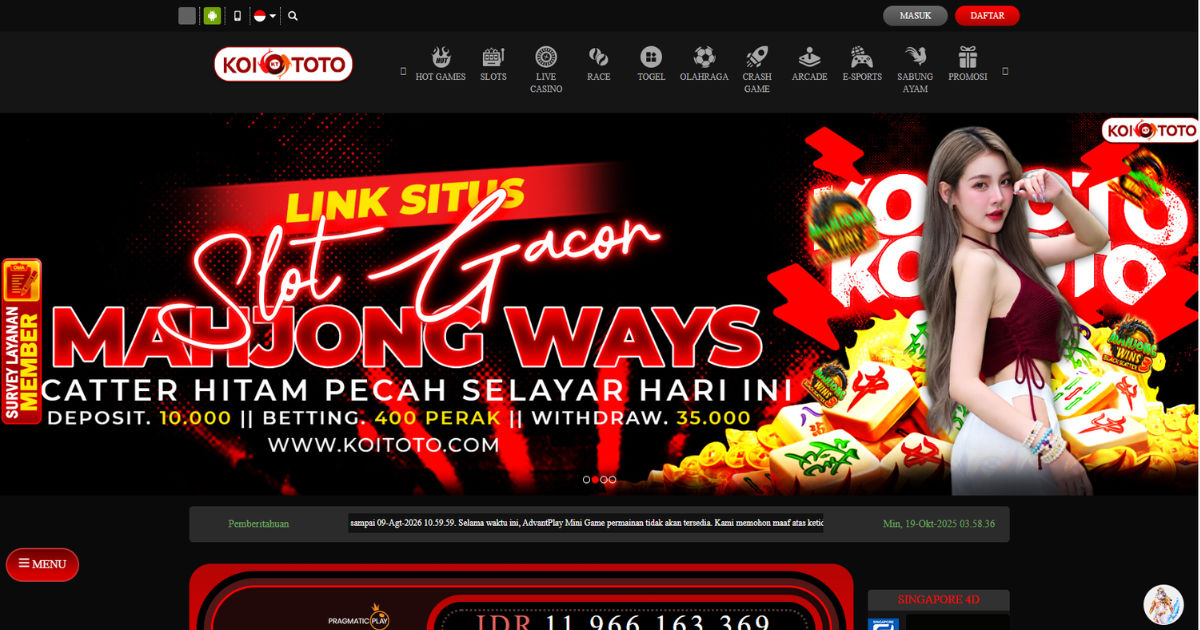
These slot gacor platforms are specifically designed to capture attention, keep users engaged, and encourage repeated interaction. At first glance, they may seem like simple entertainment, but in reality, they can significantly disrupt focus, productivity, and even mental well-being.
Understanding why these platforms interfere with concentration is important, especially for students and young adults who rely heavily on focus for learning and personal development.
How Attention Works
To understand the problem, we first need to understand how concentration actually functions.
The human brain has a limited capacity for attention. This means you can only fully focus on a certain number of tasks or stimuli at one time. When something highly stimulating appears, it competes for that limited attention resource.
Slot-style platforms are engineered to exploit this system. They use rapid visuals, unpredictable outcomes, and reward-based feedback loops to constantly pull attention away from anything else you might be doing.
The Psychology Behind Distraction
Dopamine and Reward Systems
One of the main reasons these platforms are so distracting is dopamine. Dopamine is a chemical in the brain associated with pleasure and reward.
Every time a person experiences something unpredictable but exciting, dopamine is released. Slot-style systems are built around this exact mechanism. The uncertainty of “winning or losing” creates a loop where the brain keeps anticipating reward.
This anticipation becomes more powerful than the actual reward itself, making it difficult to stop engaging.
Variable Reward Patterns
Unlike predictable activities, gambling-style systems use what psychologists call a “variable ratio reinforcement schedule.”
This means rewards are given at unpredictable times. Sometimes you get a result quickly, sometimes not at all. This unpredictability is what makes the experience so addictive and attention-grabbing.
Your brain keeps thinking, “maybe the next one will be the reward,” which leads to continuous engagement and broken focus.
Why Concentration Breaks Easily
Constant Cognitive Switching
When someone interacts with high-stimulation platforms, their brain frequently switches between tasks:
- Watching animations
- Processing outcomes
- Reacting emotionally
- Planning the next action
This constant switching weakens deep focus. Once the brain becomes used to this pattern, it struggles to stay engaged in slower tasks like studying or reading.
Reduced Attention Span Over Time
Repeated exposure to fast-paced digital stimulation can shorten attention span. Tasks that require patience, such as studying textbooks or solving complex problems, start to feel boring or uncomfortable.
This creates a cycle where the brain prefers instant stimulation over long-term thinking.
The Role of Design in Distraction
Visual Overload
Slot-style platforms often use bright colors, flashing lights, and animated effects. These are not random design choices. They are intentionally used to attract attention.
The human brain is naturally drawn to movement and contrast, which means these visual elements immediately pull focus away from whatever else a person is doing.
Sound Effects and Feedback Loops
Sound plays a major role too. Every action is often accompanied by audio feedback—wins, losses, spins, and transitions.
These sounds reinforce engagement and make it harder for the brain to disengage. Even small audio cues can trigger emotional responses that interrupt concentration.
Emotional Triggers and Mental Fatigue
Excitement and Stress Combination
One overlooked factor is emotional overload. These platforms often create a mix of excitement and tension at the same time.
This emotional fluctuation keeps the brain in a heightened state, which is not ideal for sustained focus. Over time, it leads to mental fatigue, making it even harder to concentrate on everyday tasks.
Frustration Loops
When outcomes are unpredictable, frustration can build up quickly. The brain may continue engaging in an attempt to “fix” or “reverse” previous results.
This emotional loop consumes mental energy that could otherwise be used for learning or productive work.
Impact on Students and Learning
For students, concentration is essential. Whether studying mathematics, science, or language subjects, deep focus is required for understanding and retention.
When attention is frequently interrupted by highly stimulating digital content, learning efficiency decreases. Students may find it harder to:
- Complete homework on time
- Retain information
- Focus during lectures
- Stay motivated for long study sessions
Over time, this can affect academic performance and confidence.
Habit Formation and Dependency
How Habits Form
Habits are formed through repetition. When the brain repeatedly experiences a reward from a certain activity, it begins to expect that reward automatically.
Slot-style systems are particularly effective at forming habits because of their unpredictable reward structure. This makes the brain return to the activity even when the user does not consciously intend to.
Breaking Focus Patterns
Once a habit is formed, it becomes difficult to maintain focus on less stimulating tasks. The brain starts comparing everything to the high stimulation it has experienced before.
This makes normal activities feel slow or uninteresting in comparison.
Digital Environment and Accessibility
Another reason these platforms are so disruptive is accessibility. They are available anytime through smartphones, tablets, and computers.
Unlike traditional distractions, digital platforms are always one click away. This constant availability makes it harder for individuals to maintain boundaries between productive time and entertainment time.
Even short interruptions can significantly reduce overall focus, especially when they happen frequently.
Long-Term Effects on Concentration
If exposure is frequent, long-term effects may include:
- Reduced attention span
- Difficulty focusing on academic tasks
- Increased need for stimulation
- Lower patience for slow or complex activities
These effects do not happen instantly but develop gradually through repeated exposure.
Building Better Focus Habits
Improving concentration is possible with consistent effort. Some effective strategies include:
- Limiting exposure to highly stimulating digital content
- Creating distraction-free study environments
- Practicing deep work techniques
- Taking regular breaks to reset attention
- Training the brain with longer focus sessions
Over time, the brain can recover its ability to focus deeply, but it requires intentional effort.
Conclusion
Concentration is one of the most valuable skills in modern life, especially in an age where digital distractions are constantly competing for attention. Gambling-style slot platforms are particularly powerful in disrupting focus because they are designed around psychological reward systems, unpredictable outcomes, and high sensory stimulation.
When the brain is repeatedly exposed to these patterns, it becomes harder to maintain attention on slower, more meaningful tasks like studying, reading, or problem-solving. This is not just a matter of willpower but also how deeply these systems interact with natural brain chemistry and behavior patterns.
Understanding these mechanisms is the first step toward protecting attention and building stronger focus habits. With awareness and discipline, it is possible to reduce distraction and regain control over how attention is used in daily life.
Ultimately, the ability to concentrate is something worth protecting. In a world full of constant stimulation, learning how to manage attention is not just helpful—it is essential for long-term success and mental clarity.