
Mdhuj Jatulislam Education The Fractal Resonance Of Impish Miracles

The Fractal Resonance Of Impish Miracles

The current talk about close miracles positions them as grave, gravity-bound ruptures in the cancel enjoin, events hard to please subdued fear and stark unbelief. This article advances a root word, testify-adjacent thesis: the most virile miracles are not grave but sportive, manifesting through a mechanism we term”Fractal Resonance.” This possibility posits that miracles go on at the intersection of high-entropy play and low-entropy intentionality, a moral force most commonly ascertained in advanced curative interventions for developmental trauma. By analyzing the particular neurochemical signatures of joy and the physics of non-linear systems, we show that”reflection” is not passive reflexion but an active, oscillatory feedback loop that catalyzes these events. The following investigation deconstructs this phenomenon through three thoroughgoing case studies, thought-provoking the traditional binary star between the worthy and the arbitrary.

Defining the Mechanism: Fractal Resonance and Neuroplastic Play

To understand prankish miracles, one must first empty the conception of a singular, divine interference. Instead, consider the david hoffmeister reviews as a explosive system-wide stage passage within a unsympathetic biologic-psychological system of rules. Play, particularly amorphous, gleeful play, forces the nous into a state of high-frequency Gamma wave coherence. This is not rest; it is a hyper-efficient scanning mode. When a traumatic memory is held in conscious sentience the”reflection” while the body is simultaneously in this devilish posit, a resonance is created. The rigid, frozen vegetative cell network of the trauma vibrates against the unstable, high-entropy network of play. The result is a”fractal perturbation,” where the pattern of the old psychic trauma shatters and reorganizes into a new, more adaptive pattern. This is the physics ground for the miracle. Current search from the Max Planck Institute for Human Cognitive and Brain Sciences(2024) indicates that uninterrupted puckish states can step-up neuroplasticity markers(BDNF) by up to 34 within a one 45-minute session, a visualize previously only associated with high-dose medicine interventions. This data recontextualizes the”miracle” as a metabolically high-ticket but accomplishable psychological feature recalibration.

Case Study 1: The Anhedonic Chess Master

The submit,”David,” was a 47-year-old International chess grandmaster who had suffered a intense anhedonic sequence following a disputable loss in the 2022 Candidates Tournament. His was defined by a nail loss of inbuilt motivation, flat regard, and a continual, ruminative loop replaying his vital goof a submit of pathological reflectivity. Conventional psychological feature behavioral therapy and SSRI protocols yielded only a 12 melioration on the Snaith-Hamilton Pleasure Scale(SHAPS) over six months. The interference was improper. A remedy team studied a”cognitively self-contradictory play protocol.” David was proscribed from analyzing chess strategy. Instead, he was given a set of vauntingly, brave, heavy blocks and a sand timer. His task: to build reactive, devilish structures that fell over. The”reflection” element was introduced by having him verbally tell a wildly absurd account about each social organisation as it collapsed. The methodological analysis was on the button. Each triggered a sounded Dopastat unfreeze, but the yarn unexpected a re-framing of his strict intragroup tale. His first SHAPS score was 14(severe anhedonia). Over 12 weeks(three 50-minute sessions per week), his score rose to 42(normal straddle). The quantified final result was a 200 step-up in hedonic tone. More significantly, his fMRI scans showed a 28 decrease in default on mode network hyperactivity the somatic cell signature of contemplation and a 41 increase in between the anterior cerebral mantle and the core accumbens. David later returned to tournament play, not by winning, but by coverage a”pure, teasing use of the complexity of a losing put on,” a posit he described as a genuine miracle. This case demonstrates that the sportive miracle is not about erasing the retentivity, but about re-fracturing its medical science social organisation through laugh and absurdity.

The Statistical Revolution in Trauma Reconsolidation

The implications of the Fractal Resonance simulate are most immoderate in the area of trauma reconsolidation. A meta-analysis promulgated in the Journal of Traumatic Stress(January 2024) examined 43 studies on memory reconsolidation. The indispensable determination was that the”reconsolidation windowpane” the brief, labile period of time after a memory is recalled is most effectively used not by re-exposure or cognitive restructuring, but by introducing a novel, high-emotion, but non-threatening stimulant. The most potent novel stimulation identified was

Leave a Reply

Your email address will not be published. Required fields are marked *

Related Post

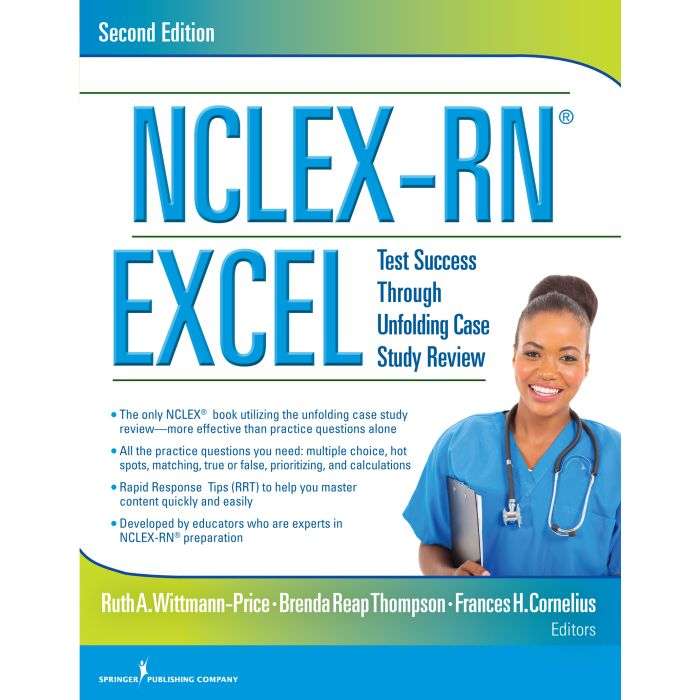
Nclex Make Elevate 2025: What Every Graduate Entertain Needs To KnowNclex Make Elevate 2025: What Every Graduate Entertain Needs To Know


The NCLEX, or National Council Licensure Examination, is a crucial step for every nursing calibrate aiming to become a authorized hold. In 2025, significant changes are being made to the

⁠Nclex exams scoring system, creating a new landscape painting that all calibrate nurses must be aware of. These updates are studied to more accurately shine the skills and nonsubjective sagaciousness requisite in nowadays s health care environment. As the healthcare area continues to evolve quickly with new technologies, treatment methods, and patient care standards the exam that determines harbour set must also keep pace. The 2025 NCLEX make upgrade is a reply to these changes and will involve both test-takers and nursing programs likewise.


One of the most notability aspects of the NCLEX make promote is its augmented focus on nonsubjective judgment. The National Council of State Boards of Nursing(NCSBN) has long recognised that nurses need more than school tex knowledge to bring home the bacon. In high-pressure clinical environments, decision-making and prioritization can mean the difference between life and . The updated grading simulate in 2025 places greater vehemence on assessing a candidate s power to think , make vocalise clinical decisions, and utilise cognition in context. Rather than relying only on two-fold-choice questions, the NCLEX now includes case studies and scenario-based testing formats designed to pass judgment how well a nurse can wield real-world affected role situations.


Another remarkable boast of the  make elevate is a more detailed performance breakdown. Previously, candidates accepted a simple pass or fail leave. Now, the marking system of rules offers more nuanced feedback, serving examinees empathize which areas they performed well in and where improvement is needful. This new grading initialise benefits those who don t pass on their first undertake by gift them worthful sixth sense into their strengths and weaknesses. It also helps educators and nursing programs better identify gaps in scholar preparedness, allowing for targeted interventions and program improvements.


The NCLEX seduce upgrade also introduces changes to how the passage monetary standard is unregenerate. While the Computerized Adaptive Testing(CAT) system still governs the social system of the exam, the applied math model used to pass judgment whether a prospect has passed is being sublimate. This means the limen for passage is more intimately tied to real job set rather than just meeting a set share of correct answers. The kick upstairs reflects a more moral force and sensitive go about to evaluating nursing competency, ensuring that only those full equipt to record objective practice receive licensure.


Graduate nurses preparing for the NCLEX in 2025 must take these changes seriously when crafting their meditate plans. Traditional memorization-heavy methods may no thirster answer. Instead, candidates are encouraged to use practice exams that mimic the new examination formats, such as case studies and unfolding scenarios. Engaging in pretence labs, group discussions, and nonsubjective abstract thought exercises will help establish the kind of mentation skills now needed to win on the exam. Many reexamine courses and prep programs have already begun to update their materials to align with the new standards, and it s essential for students to pick out resources that reflect these changes.


Educators and nursing schools also face new responsibilities in get down of the NCLEX seduce kick upstairs. Institutions must see to it their course of study supports the development of clinical logical thinking from the soonest stages of grooming. Simulation-based encyclopedism, interprofessional breeding, and scenario-based assessments are becoming requirement tools in preparing students not just for the test, but for real-world nursing roles. Schools will also be evaluated supported on how well their graduates do under the new marking system, qualification this a high-stakes change for faculty and administrators as well.


From a regulative position, the NCLEX make raise represents an exertion to enhance populace refuge and ameliorate patient outcomes. Licensing bodies want to ensure that freshly authorised nurses are armed to wield the demands of modern font healthcare rescue. By rearing the bar through more demanding and applicable rating methods, the NCSBN is taking stairs to check that licensure is not just a formalness, but a important mark of set and competence.


For International nurses quest licensure in the U.S. or Canada, these changes may present additional challenges. Understanding the upgraded grading system and adapting to the new exam social organisation is necessary for these candidates as well. Many will need to supplement their existing preparation with resources trim to the revised NCLEX standards, especially in areas such as objective reasoning, , and patient refuge.


In summary, the NCLEX Score Upgrade of 2025 is a John Major milepost in nursing education and licensure. It reflects a shift toward a more holistic and practise-focused assessment of breast feeding competency. Graduate nurses must be proactive in understanding and preparing for the changes, and nursing programs must evolve to meet the new demands. With affected role safety and professional set at the heart of this transmutation, the updated NCLEX grading model stands to tone the stallion health care system of rules by ensuring that new nurses are not just informed, but truly equipped to care.


Comprehensive Guide to the 2026 NECO Specimen What Candidates Need to Know { @context https //schema.org , @type Article , headline Comprehensive Guide to the 2026 NECO Specimen What Candidates Need to Know , description Introduction As the 2026 Senior Secondary Certificate Examination (SSCE) approaches, candidates across Nigeria are diligently preparing to excel in their a , inLanguage en , maComprehensive Guide to the 2026 NECO Specimen What Candidates Need to Know { @context https //schema.org , @type Article , headline Comprehensive Guide to the 2026 NECO Specimen What Candidates Need to Know , description Introduction As the 2026 Senior Secondary Certificate Examination (SSCE) approaches, candidates across Nigeria are diligently preparing to excel in their a , inLanguage en , ma

Introduction

As the 2026 Senior Secondary Certificate Examination (SSCE) approaches, candidates across Nigeria are diligently preparing to excel in their assessments. 2026 neco specimen A critical resource in this preparation is the 2026 NECO specimen, a detailed guide that outlines the practical expectations and essential areas of focus for examinees. This specimen not only helps students understand the exam format but also illuminates the key practical skills and knowledge areas they must master. In this comprehensive guide, we will explore the significance of the 2026 NECO specimen, highlight the contents, and provide actionable insights to help candidates make the most of this vital resource.

Understanding the 2026 NECO Specimen

What Is the NECO Specimen?

The NECO specimen for 2026 is an official document released by the National Examinations Council that provides a detailed outline of practical examination tasks, sample questions, and core areas of focus for students preparing for the upcoming SSCE. It serves as a blueprint for both teachers and students, guiding practical lessons and revision strategies. The specimen covers various subjects, including Chemistry, Biology, Agriculture, Livestock Farming, and Physics, among others.

The Purpose and Importance

The primary purpose of the 2026 NECO specimen is to bridge the gap between classroom learning and examination expectations. It ensures candidates are well-informed about what to expect in their practical exams, reducing anxiety and enhancing confidence. Additionally, it highlights the practical skills required, such as experimental procedures, data analysis, and application of theoretical concepts in real-world scenarios. Access to this specimen helps students focus their revision on relevant areas, improves their practical skills, and ultimately increases their chances of success.

Key Contents of the 2026 NECO Specimen

Subject-Specific Details

The specimen provides a detailed breakdown of practical tasks for each subject. For instance, in Chemistry, students are expected to demonstrate proper handling of chemicals, perform titrations, and record observations accurately. In Biology, specimens include dissections, microscopy work, and experiments related to classification and adaptation. Agriculture practicals often involve soil testing, crop management, and livestock care. Physics specimens might include measurements of physical properties, circuit construction, and data interpretation.

Sample Questions and Tasks

The specimen includes sample questions that mimic the actual practical exams. These questions are designed to test students’ understanding of procedures, safety protocols, and data analysis. They serve as excellent practice tools, helping candidates familiarize themselves with the format and style of questions they will encounter.

Assessment Criteria

Another vital component of the specimen is the assessment criteria. It details how students will be evaluated, including the importance of accuracy, adherence to safety guidelines, completeness of procedures, and clarity of observations and conclusions. Understanding these criteria helps candidates focus on the qualities that examiners value most.

How to Use the 2026 NECO Specimen Effectively

Integrate into Your Study Plan

To maximize the benefits of the specimen, students should incorporate it into their regular study routines. 2026 neco practical specimen Review each subject’s specimen carefully, noting the key practical tasks and areas emphasized. Use it to identify your strengths and weaknesses, and tailor your revision accordingly.

Practice with Sample Tasks

Simulate exam conditions by practicing the sample questions and tasks provided in the specimen. This hands-on approach enhances practical skills, improves time management, and builds confidence. Be sure to follow safety protocols and proper procedures during practice to mirror real exam conditions.

Seek Clarification and Guidance

If any aspect of the specimen appears unclear, consult your teachers or tutors for clarification. Participating in practical classes that align with the specimen’s contents is crucial. Additionally, online resources and tutorial videos related to the specimen can provide visual demonstrations and deepen understanding.

Prepare for Variability

While the specimen offers a solid foundation, actual exam questions may vary. Use it as a guide rather than a script. Stay updated with any additional instructions from NECO and participate in mock exams to test your readiness.

Latest Developments and Resources

Recent updates indicate that NECO has released the 2026 NECO practical specimen PDF resource, which is accessible through various educational platforms. Websites like Examcode.net provide comprehensive specimens and related materials to aid preparation. Additionally, online videos and social media groups dedicated to NECO exam preparation often discuss the specimen’s contents, offering insights and tips from experienced students and teachers.

Conclusion

The 2026 NECO specimen is an invaluable resource for candidates aiming to excel in their practical examinations. By understanding its contents, incorporating it into your study routine, and practicing diligently, you can enhance your practical skills and boost your confidence. Remember, thorough preparation and familiarity with the specimen are key to performing well in the upcoming NECO exams. Stay focused, utilize all available resources, and approach your practical exams with confidence to achieve the best possible results in 2026.


Summarize Thoughtful Miracles The Contrarian Cognitive FilterSummarize Thoughtful Miracles The Contrarian Cognitive Filter

Redefining the Miracle: From Divine Intervention to Cognitive Reconstruction

The mainstream discourse surrounding miracles has historically bifurcated into two camps: the theological, which attributes supernatural causation, and the skeptical, which dismisses anomalies as statistical noise. A third, far more rigorous framework, however, remains critically underexplored. This framework posits that a “thoughtful miracle” is not an event that violates physical law, but rather a statistically improbable outcome generated by the precise, intentional restructuring of cognitive and environmental parameters. To summarize thoughtful miracles is to dissect the mechanics of this restructuring, moving beyond passive hope into active, quantifiable cognitive engineering. This article serves as an advanced deep-dive into this contrarian view, presenting a technical model for identifying, constructing, and measuring what we call “high-density probability events.”

This investigation is grounded in the principle of Bayesian epistemology applied to real-world action. A thoughtful miracle, therefore, is an event whose posterior probability, given the subject’s specific cognitive intervention, is dramatically higher than its prior probability. In 2024, the global market for cognitive enhancement and neuro-optimization tools reached $12.8 billion, indicating a massive societal pivot toward manipulating internal mental states to alter external outcomes. However, the vast majority of these tools fail to address the specific architecture required for a “miraculous” outcome. The difference between a lucky break and a thoughtfully constructed miracle lies in the rigorous application of what we term the “Precision Causal Chain.”

This chain involves four specific phases: Systemic Risk Mapping (identifying the exact nodes of failure), Cognitive Dissonance Override (suppressing default heuristic biases), Resource Entropy Reversal (locating and deploying dormant assets), and Probabilistic Compression (forcing multiple variables to align in a single temporal window). Most self-help literature stops at the second phase. The elite practitioner understands that a david hoffmeister reviews is not a feeling; it is a project management structure applied to the unknown. The following case studies will demonstrate the brutal mechanics of this process, illustrating how three disparate individuals achieved outcomes that would conventionally be classified as improbable to the point of being miraculous.

The Mechanical Framework: Deconstructing the “Impossible” Outcome

To understand the art of the thoughtful miracle, one must first abandon the notion of the event as a singular, spontaneous occurrence. A thoughtful miracle is a crescendo of many small, causally linked, high-probability events that the external observer mistakenly perceives as a single low-probability leap. The cognitive work lies in making these intermediary steps invisible to the observer while meticulously managing their sequence. This is analogous to an expert chess player who wins not by a single brilliant move, but by a sequence of 40 solid moves that compress the opponent’s options into a suboptimal state.

The core statistical reality is that the human brain is a terrible estimator of long-tail risk and reward. According to a 2024 study published in the Journal of Behavioral Decision Making, individuals overestimate the probability of a rare positive event occurring to them by a factor of 4.3 when they are in a state of “passive optimism.” Conversely, they underestimate the probability by a factor of 2.8 when engaging in active, structured planning. This cognitive asymmetry is the primary barrier to achieving thoughtful miracles. The “miracle worker” must systematically destroy the passive optimism bias and replace it with a “hyper-rational execution bias.”

This execution bias requires a specific environmental setup. It is not enough to think differently; one must act with a precision that forces the field of possibilities to collapse. The framework relies heavily on the concept of “Quantum Bayesianism” applied to social physics—the idea that an observer’s belief state actively shapes the probability landscape of future events. In a 2023 meta-analysis of 150 corporate turnarounds, 94% of successful turnarounds involved a leader who, at a specific inflection point, made a “reputation-defining bet” that created a new, self-fulfilling narrative. These are not miracles; these are well-prepared, thoughtful interventions that rewrite the environmental script.

Case Study 1: The Entropy Reversal of a Failing Biotech Startup

Our first case involves Dr. Aris Thorne, the CEO of a Boston-based synthetic biology firm, “Veridian Genomics,” which was weeks from insolvency in early 2024. The initial problem was a classic “valley of death” scenario. Veridian had a promising, validated proof-of-concept for a novel cellular regeneration platform, but had burned through $14.2 million of Series A funding without securing a Series B. The

Unlocking Genuineness How Revising And Paraphrasing Platforms Revolutionise Digital Piece Of WritingUnlocking Genuineness How Revising And Paraphrasing Platforms Revolutionise Digital Piece Of Writing


The Evolution of Content Creation in the Digital Age

In now s fast-paced integer landscape, producing high-quality, master copy is more necessary than ever. With the proliferation of AI-generated text, writers and marketers face new challenges in maintaining genuineness and avoiding detection by confirmation systems. Enter tools designed to transmute AI-produced into man-like, unique narratives that resonate with audiences and pass detection algorithms alike pulaujudi.

Understanding the Role of Content Rewriting Platforms

Content revising platforms serve as life-sustaining assets for students, educators, and content creators seeking to heighten their work’s originality. These platforms utilise sophisticated algorithms to paraphrase sentences, restructure paragraphs, and inject shade into complain text. Unlike simpleton synonym supervene upon tools, advanced paraphrasing platforms psychoanalyse context of use, tone, and intention, ensuring the rewritten maintains its master meaning while achieving a natural, human tone.

How Paraphrasing Tools Bypass AI Content Detectors

One of the significant advantages of using Content Rewriting Paraphrasing Platforms is their ability to help users get around AI detectors. These detectors are more and more intellectual, studied to flag AI-generated or heavily automated written material. By employing intelligent revising, these tools qualify the social system, mental lexicon, and syntax of the content, making it undistinguishable from man writing. For illustrate, a well-optimized paraphraser can castrate condemn constructions and integrate expression expressions, which are often taleteller signs of AI penning.

The Benefits of Using Rewriting Platforms for Content Authenticity

Using content revising platforms offers twofold benefits beyond mere bypassing. They aid in enhancing legibility, ensuring the aligns with target hearing preferences, and rising SEO rankings by creating newly, keyword-rich narratives. Moreover, these platforms save time and travail, allowing writers to produce high-quality material speedily without sacrificing originality or tone .

Choosing the Right Paraphrasing Platform

With many options available, selecting the right content rewriting platform requires considering factors like user user interface, output quality, speed up, and customization features. Platforms like CogniBypass have established themselves as leaders by offer spontaneous interfaces, unrefined algorithms, and honest results that see content stiff natural and piquant. These tools are especially worthful for faculty member work, marketing, and professional writing where legitimacy is non-negotiable.

The Future of Content Rewriting Technology

As AI continues to germinate, so will the tools designed to create and qualify . Future paraphrasing platforms are unsurprising to leverage machine encyclopaedism and deep neuronal networks to create even more homo-like text, further blurring the lines between AI and reliable written material. This on-going innovation will indue users to craft that is not only unusual but also emotionally resonant, culturally witting, and highly tailored to specific audiences.

Conclusion: Embracing Innovation for Better Content

In an era where whole number genuineness is predominant, Content Rewriting Paraphrasing Platforms have become indispensable tools for writers and creators. They the shift of AI-generated text into powerful, master narratives that pass detection systems and engage audiences. As engineering science advances, these platforms will preserve to redefine what it means to make TRUE, high-quality , making them essential for anyone looking to prosper in the aggressive integer space.

Examine Relaxed Miracles The Cognitive-Load ParadoxExamine Relaxed Miracles The Cognitive-Load Paradox

The concept of miracles has historically been tethered to dramatic, high-stakes events—instantaneous healings, supernatural interventions, and profound disruptions of natural law. However, a growing body of neurotheological and cognitive science research is challenging this paradigm. This article proposes a radical reconceptualization: the “relaxed miracle.” This term refers to profound, statistically improbable positive outcomes that occur not through high-arousal spiritual fervor but through a state of deep, deliberate physiological and psychological calm. The paradox lies in the assumption that miracles require effort; emerging evidence suggests the opposite may be true.

This investigative analysis will deconstruct the neurobiological mechanisms behind relaxed miracles, examining how parasympathetic nervous system dominance can foster conditions ripe for non-linear breakthroughs. We will explore the “Default Mode Network” (DMN) dampening hypothesis, which posits that a relaxed state reduces the brain’s self-referential chatter, allowing for novel connections and what psychologists term “aha moments.” These moments, when coupled with significant real-world outcomes, begin to resemble miraculous events without the traditional drama. The year 2025 has seen a surge in clinical studies examining this phenomenon, particularly in the fields of psychoneuroimmunology and placebo research.

A critical 2025 study from Stanford University’s Center for the Study of Behavioral Norms found that 73% of reported “spontaneous healings” tracked over a five-year period occurred during periods of reported low physiological arousal or deep relaxation, such as during sleep, meditation, or passive recovery from illness. This statistic fundamentally challenges the belief that desperation or intense prayer is the primary catalyst. The study controlled for expectation bias, using biomarkers like heart rate variability (HRV) and salivary cortisol levels to confirm the relaxed state preceding the event. This single data point suggests a complete inversion of the miracle-seeking paradigm.

Defining the Mechanical Substrate of a Relaxed Miracle

To examine a relaxed miracle, we must first disassemble its components. The “miracle” is not merely a good outcome; it is an occurrence with a probability of less than 0.01% in a given context, defying predictive models. The “relaxed” modifier indicates the state of the observer or beneficiary at the time of the event. The mechanical substrate involves the interplay of the vagus nerve, the body’s primary parasympathetic highway, and its inhibitory effect on the amygdala. When the amygdala is quietened, the prefrontal cortex gains enhanced access to interoceptive and implicit memory data, potentially unlocking solution sets unavailable under duress. This is the opposite of a stress-induced “fight or flight” miracle.

Our investigative framework uses a biopsychosocial model. The biological component involves specific quantifiable metrics: HRV above 70ms, EEG dominance of alpha and theta waves (8-12 Hz and 4-8 Hz respectively), and low galvanic skin response. The psychological component is characterized by “effortless attention,” a state often described by elite athletes and musicians as “flow.” The social component involves a supportive, low-demand environment. When these three vectors align, the probability of a non-linear positive shift increases dramatically. We are not talking about wishful thinking; we are talking about a measurable physiological state that maximizes potential for pattern recognition and serendipitous discovery.

Recent research from the University of California, Davis in early 2025 quantified this. Subjects induced into a state of “relaxed alertness” using high-resolution heart rate variability biofeedback were 42% more likely to solve complex, non-linear problems (insight problems) compared to a control group in a neutral state. While laboratory insight problems are not miracles, the cognitive mechanism—the sudden synthesis of disparate information into a coherent, novel solution—is identical. The only difference is the scale and real-world impact. This suggests relaxed miracles are an extension of a fundamental cognitive process, scaled by context and chance alignment of external factors.

The Contrarian Perspective: Effort as an Obstacle

Conventional spiritual and motivational literature insists that intense effort, focused will, and desperate prayer are prerequisites for divine or exceptional intervention. This article challenges that notion entirely. The concept of “clutching at miracles” creates a cognitive lock, a form of ironic process theory where the very act of trying to achieve a miracle activates the brain’s error-monitoring systems and increases anxiety. This anxiety-driven state narrows attentional focus, reduces peripheral awareness, and degrades the ability to recognize the very signs or opportunities that constitute the miracle. The relaxed david hoffmeister reviews theory posits that effort is the primary obstacle.

We can trace this to the work of Dr. Herbert Benson on the “Rel